Collegiate Esports: $500K Prize Pools by 2026
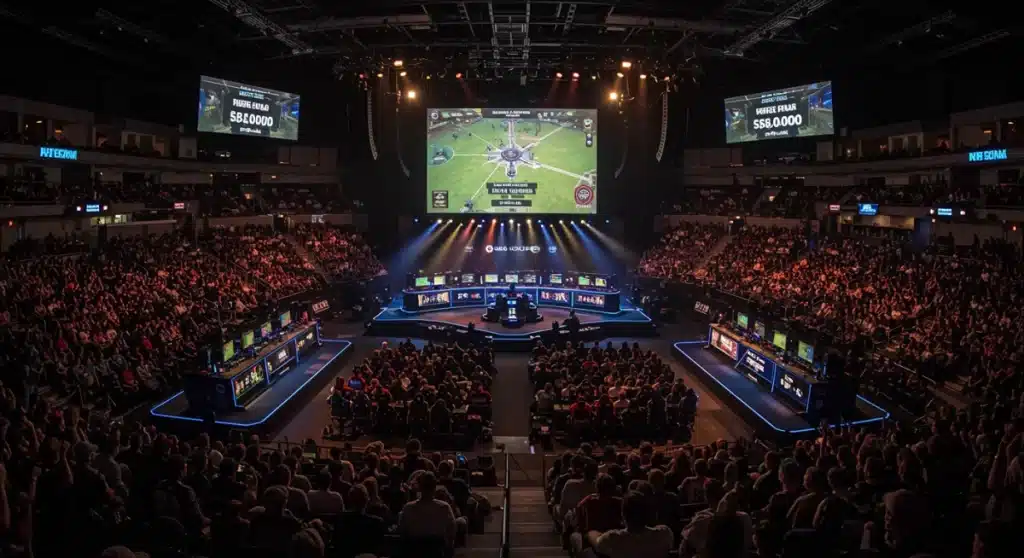
US collegiate esports programs are rapidly escalating their financial impact, projected to secure over $500,000 in annual tournament prize pools by 2026, marking a significant milestone in academic gaming.
The Financial Upside: How US Collegiate Esports Programs Are Securing Over $500,000 in Annual Tournament Prize Pools by 2026
The landscape of competitive gaming is evolving at an unprecedented pace, and nowhere is this more evident than in higher education. By 2026, forecasts indicate that US collegiate esports programs are securing over $500,000 in annual tournament prize pools, transforming what was once a niche hobby into a substantial financial and academic endeavor. This remarkable growth signifies a pivotal shift, offering unprecedented opportunities for student athletes and institutions alike.
Advertisements
The meteoric rise of collegiate esports funding
Collegiate esports has moved far beyond its nascent stages, now attracting significant investment and generating substantial financial incentives. The promise of half a million dollars in annual prize money by 2026 reflects a robust ecosystem of sponsorships, university backing, and increasing viewership. This financial surge is not merely about prize money; it underpins the entire infrastructure of collegiate gaming, from state-of-the-art facilities to coaching staff and scholarships.
This growth is fueled by several interconnected factors, including the mainstream acceptance of esports as a legitimate sport, the increasing engagement of Gen Z with gaming, and the strategic vision of universities recognizing the academic and recruitment potential of these programs. The financial rewards serve as a powerful motivator, drawing top talent and fostering intense competition.
strategic partnerships and sponsorships
A significant portion of the financial upside in collegiate esports comes from strategic partnerships. Brands are eager to connect with the highly engaged and tech-savvy demographic that esports offers.
- Tech companies: Hardware manufacturers, software developers, and internet service providers often sponsor teams or entire leagues, providing equipment, financial support, and marketing.
- Energy drink brands: A natural fit for the gaming community, these companies frequently invest in esports events and teams, offering both funding and product placement.
- Traditional sports organizations: Some professional sports teams and leagues are beginning to invest in esports, seeing it as an extension of their entertainment empire.
- Local businesses: Community-level sponsorships can also contribute, providing smaller but crucial financial injections for local teams and tournaments.
These partnerships not only inject capital but also lend credibility and professional polish to collegiate esports programs, making them more attractive to prospective students and further boosting their financial potential.
The increasing professionalization of collegiate esports has also led to more structured revenue streams. Universities are now actively seeking out and managing these relationships, often employing dedicated staff to ensure the long-term sustainability and growth of their esports initiatives. This proactive approach is critical to reaching and exceeding the $500,000 prize pool milestone.
scholarships and academic integration
Beyond the direct prize money, the financial benefits extend to academic opportunities through scholarships. Universities are increasingly offering esports scholarships, recognizing the talent and dedication required to excel in competitive gaming. These scholarships not only attract skilled players but also provide a pathway for students to pursue higher education while honing their gaming abilities.
Academic integration is another key component of this financial upside. Many institutions are developing esports-related curricula, offering degrees in game design, esports management, and digital media. This creates a symbiotic relationship where academic pursuits complement competitive play, preparing students for careers in the rapidly expanding esports industry.
the value of esports scholarships
Esports scholarships are becoming a significant draw for high school students, offering a compelling alternative or supplement to traditional athletic scholarships. These scholarships can cover tuition, housing, and other educational expenses, making higher education more accessible for talented gamers.
- Recruitment tool: Universities use scholarships to attract top-tier esports talent, enhancing their team’s competitiveness and prestige.
- Financial relief: For students, scholarships alleviate the financial burden of college, allowing them to focus on academics and gaming.
- Legitimization of esports: The existence of scholarships further legitimizes esports as a recognized and valued collegiate activity.
This integration into the academic framework ensures that the financial growth of collegiate esports is sustainable and beneficial to students’ overall development. The focus isn’t solely on winning, but also on academic success and future career prospects.
The commitment to academic excellence alongside competitive gaming highlights the holistic approach many institutions are taking. This dual focus ensures that students are not just exceptional players but also well-rounded individuals prepared for diverse professional paths, whether within esports or other industries.
the role of viewership and media rights
A crucial driver of the financial growth in collegiate esports is the burgeoning viewership and the subsequent potential for media rights. As more people tune in to watch college-level competitions, the value of broadcast rights and advertising opportunities skyrockets. Platforms like Twitch, YouTube Gaming, and even traditional sports networks are recognizing the appeal of collegiate esports.
Increased viewership translates directly into more attractive sponsorship deals and greater revenue generation for tournament organizers and participating institutions. This cycle of engagement and investment is propelling collegiate esports towards significant financial milestones.
monetizing the esports audience
The collegiate esports audience is a highly desirable demographic for advertisers: young, tech-savvy, and engaged. Monetization strategies are becoming increasingly sophisticated.
- Streaming revenue: Direct revenue from platforms through subscriptions, ads, and donations during live broadcasts.
- Advertising sales: Brands paying to place ads during tournament broadcasts, on team jerseys, or within game streams.
- Media rights deals: Agreements with broadcast partners for exclusive rights to stream or televise collegiate esports events.
- Merchandise sales: Revenue from selling team-branded apparel and gear, fostering fan engagement and loyalty.
The ability to effectively monetize this audience is a cornerstone of achieving and surpassing the $500,000 prize pool target. As the audience grows, so too does the financial potential, creating a virtuous cycle of investment and reward.
The professional production quality of collegiate esports events is also improving, making them more appealing to a wider audience. High-quality broadcasts, expert commentary, and engaging content are all contributing to the rise in viewership and, consequently, the financial value of these programs.
infrastructure and facilities investment
To support the escalating demands of competitive esports, universities are investing heavily in state-of-the-art infrastructure and dedicated facilities. These investments are integral to attracting top talent, providing optimal training environments, and hosting high-profile tournaments that contribute to the overall prize pool. From dedicated arenas to advanced training rooms, the physical presence of esports is becoming a cornerstone of university campuses.
These facilities are not just for practice; they serve as broadcast hubs, community gathering spaces, and venues for major events, further enhancing the financial viability and prestige of collegiate esports programs.
building the future of collegiate gaming
Modern esports facilities are designed to meet the rigorous demands of competitive play and professional broadcasting.
- Esports arenas: Dedicated venues with high-end PCs, ergonomic gaming chairs, large display screens, and spectator seating.
- Training rooms: Spaces equipped with advanced gaming setups for team practice, strategy sessions, and individual skill development.
- Broadcast studios: Facilities for producing high-quality live streams and video content, complete with cameras, mixing boards, and professional lighting.
- Casual gaming lounges: Areas for students to relax, socialize, and engage in recreational gaming, fostering a broader gaming community.
These investments are a clear signal of institutional commitment to esports, creating an environment where student athletes can thrive and where significant prize money can be generated through well-organized and highly visible tournaments. The quality of these facilities directly impacts the ability to attract and retain top talent, which in turn drives competitive success and financial rewards.
The strategic development of these physical spaces underscores the long-term vision many universities have for their esports programs. These aren’t temporary setups but rather permanent fixtures designed to support growth and innovation for years to come.
the competitive landscape and talent development
The increasing financial incentives are creating a highly competitive landscape within collegiate esports, driving institutions to invest more in talent identification and development. Universities are actively recruiting skilled gamers, offering comprehensive support systems that mirror traditional athletic programs, including coaches, sports psychologists, and academic advisors.
This focus on talent development ensures that teams are not only competitive but also foster an environment where players can grow both as athletes and individuals. The pursuit of prize money is intertwined with the cultivation of exceptional talent, creating a dynamic and rewarding ecosystem.
nurturing future esports stars
Developing talent in collegiate esports involves a multi-faceted approach, focusing on skill, teamwork, and mental fortitude.
- Dedicated coaching staff: Experienced coaches provide strategic guidance, analyze gameplay, and help players improve individual and team performance.
- Performance analytics: Utilizing data to track player statistics, identify strengths and weaknesses, and optimize training regimens.
- Mental and physical wellness: Programs addressing player health, stress management, and maintaining a healthy work-life balance.
- Scrims and practice schedules: Structured practice sessions against other teams to refine strategies and build cohesion.
The investment in talent development is a direct contributor to securing larger prize pools. Stronger teams perform better in tournaments, attracting more viewership, sponsors, and ultimately, greater financial rewards. This emphasis on player growth is essential for the sustained success and financial prosperity of collegiate esports programs.
The competitive drive spurred by these financial incentives pushes players to reach their full potential, contributing to a higher standard of play across the collegiate circuit. This elevates the overall quality of tournaments, making them more exciting and financially lucrative.
economic impact and future projections
The financial growth of collegiate esports extends beyond prize pools, creating a significant economic impact on universities and local communities. The influx of students, faculty, and events generates revenue for local businesses, creates job opportunities, and enhances the overall economic vitality of surrounding areas. This ripple effect further solidifies the argument for continued investment in collegiate esports.
Looking ahead to 2026 and beyond, the trajectory suggests even greater financial milestones. As the industry matures, new revenue streams, advanced technologies, and even broader mainstream acceptance will likely push prize pools and overall investment to unprecedented levels.
forecasting continued growth
Several indicators point towards sustained and accelerated financial growth in collegiate esports.
- Increased university participation: More institutions are launching or expanding esports programs, increasing the talent pool and competitive circuit.
- Broader game titles: Expansion into a wider variety of popular esports titles, attracting diverse player bases and fan communities.
- International collegiate competition: The potential for global collegiate tournaments, further elevating prize pools and media exposure.
- Technological advancements: Innovations in streaming, virtual reality, and interactive fan experiences will open new monetization avenues.
The projection of securing over $500,000 in annual tournament prize pools by 2026 is not an ambitious guess but a realistic outcome based on current trends and the robust investment flowing into the sector. The economic impact will only continue to grow, making collegiate esports a powerful force in both education and entertainment.
The long-term vision for collegiate esports sees it as an integral part of the university experience, not just a fleeting trend. This commitment ensures that the financial benefits will continue to accrue, benefiting students, institutions, and the wider gaming community.
| Key Aspect | Impact on Prize Pools |
|---|---|
| Sponsorships | Direct financial contributions and resources from brands boost tournament funding. |
| Viewership Growth | Increased audience attracts higher media rights and advertising revenue, funding prize pools. |
| University Investment | Funding for facilities, scholarships, and staff directly supports competitive programs. |
| Talent Development | Stronger teams driven by skilled players lead to more competitive and higher-stakes tournaments. |
Frequently Asked Questions About Collegiate Esports Funding
Collegiate esports programs primarily generate revenue through corporate sponsorships, media rights deals, university funding allocations, and merchandise sales. These diverse income streams collectively contribute to the growing prize pools and operational budgets, supporting the entire ecosystem of competitive collegiate gaming within the US.
Common sponsorships include partnerships with technology companies for hardware and software, energy drink brands for marketing and product placement, and gaming peripheral manufacturers. Increasingly, traditional sports organizations and even local businesses are also investing, recognizing the valuable demographic reached by collegiate esports.
Absolutely. Esports scholarships are a significant financial benefit, covering tuition, housing, and other educational expenses for talented student-athletes. These scholarships not only attract top players to universities but also legitimize esports as a recognized collegiate activity, fostering academic and competitive excellence simultaneously.
Increased viewership on platforms like Twitch and YouTube Gaming directly boosts the value of media rights and advertising opportunities. A larger audience attracts more sponsors and advertisers willing to invest, which in turn leads to higher prize pools and greater overall financial stability for collegiate esports programs and tournaments.
By 2026, the economic impact is projected to be substantial, extending beyond prize pools to include increased revenue for universities and local communities. This growth encompasses job creation, enhanced local business activity, and a stronger overall economic vitality driven by the influx of students, events, and investments into the esports sector.
Conclusion
The remarkable trajectory of collegiate esports in the United States, culminating in the projection of over $500,000 in annual tournament prize pools by 2026, signifies a profound transformation. This financial upside is a testament to the combined efforts of universities, strategic partners, and the burgeoning interest from a dedicated global audience. Beyond the monetary rewards, this growth fosters academic opportunities, professional development, and a vibrant competitive landscape that will continue to shape the future of both education and entertainment. The era of collegiate esports as a major financial and cultural force has truly arrived, offering unparalleled prospects for the next generation of student-athletes.