US Esports Sponsorships Soar: 20% Increase in Q4 2025
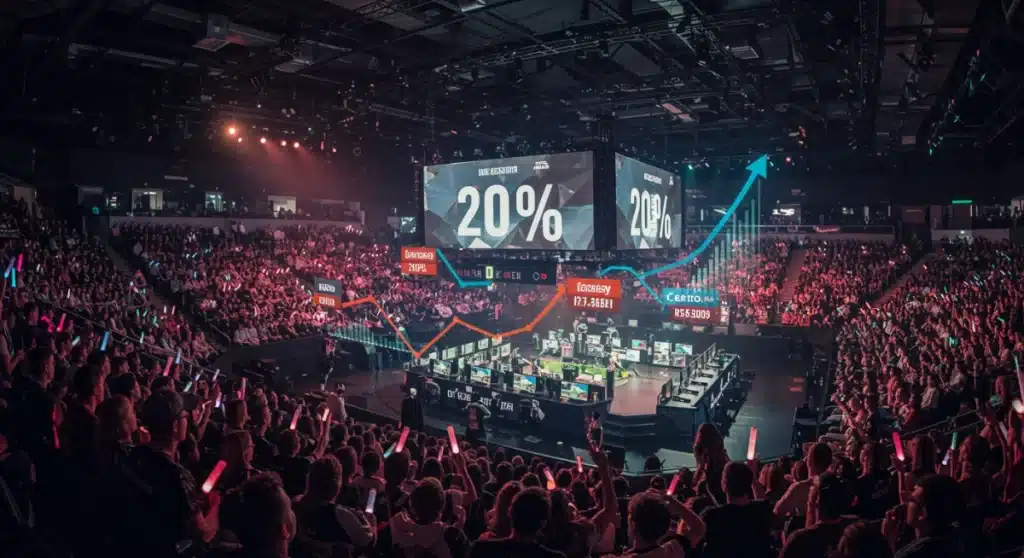
The US esports landscape witnessed a remarkable 20% surge in sponsorship deals for tournaments during Q4 2025, driven by expanding audience engagement and innovative brand integration strategies.
The world of competitive gaming is no stranger to dramatic shifts and rapid growth, but the recent announcement regarding a 20% increase in sponsorship deals for US esports tournaments in the last quarter of 2025 has sent ripples across the industry. This isn’t just a statistical blip; it signifies a maturing market, stronger brand confidence, and a clear trajectory for esports to cement its place as a mainstream entertainment powerhouse. What forces are at play, and what does this mean for the future of professional gaming?
Advertisements
The evolving esports audience: a demographic goldmine
The demographic profile of esports fans has been a significant magnet for brands. No longer a niche group, the audience for US esports tournaments is increasingly diverse and highly engaged, offering a unique opportunity for sponsors to connect with consumers who are often difficult to reach through traditional media channels.
This evolving viewership is not only growing in numbers but also in spending power and influence. Brands recognize that aligning with esports provides direct access to a demographic known for its tech-savviness, brand loyalty, and early adoption of new products and services.
Beyond the core gamer: expanding reach
Esports viewership has broadened significantly beyond the traditional “gamer” stereotype. This expansion includes a wider age range and more diverse socioeconomic backgrounds, making it an even more attractive proposition for a broader array of sponsors.
- Youthful engagement: A large percentage of esports viewers are under 35, a demographic highly valued by advertisers.
- Global appeal: While focused on the US, many tournaments have international viewership, amplifying brand exposure.
- High engagement rates: Esports fans spend significant time watching, discussing, and interacting with content, fostering deep connections.
The increasing professionalism of esports broadcasts and content creation has also played a crucial role. High-quality production values, compelling narratives, and accessible streaming platforms have made esports more appealing to a general audience, further fueling the growth in viewership and, consequently, sponsorship interest.
Strategic brand integration: more than just logos
Sponsorship in esports has moved far beyond simple logo placement. Brands are now investing in sophisticated integration strategies that resonate authentically with the esports community. This shift from passive advertising to active engagement is a key driver behind the 20% increase in deals.
Sponsors are seeking to become integral parts of the fan experience, adding value rather than merely interrupting it. This approach fosters genuine connections and builds brand loyalty within a discerning and often skeptical audience.
Innovative activation strategies
Modern esports sponsorships involve creative and interactive ways for brands to engage with fans. This includes in-game integrations, custom content creation, fan activations, and unique digital experiences that enhance the overall tournament atmosphere.
- In-game branding: Brands appear within the game itself, such as custom skins, advertising on virtual billboards, or event-specific challenges.
- Content creation: Sponsors fund original content, documentaries, or influencer collaborations that provide unique insights or entertainment.
- Fan experiences: Interactive booths at live events, virtual reality experiences, or exclusive digital rewards that enhance fan participation.
These deeper integrations allow brands to tell their story in a way that feels native to the esports environment, creating a more impactful and memorable experience for viewers. This authenticity is highly valued by the esports community and translates into stronger brand affinity.
Increased investment and infrastructure development
The significant uptick in sponsorship deals reflects a broader trend of increased investment in the esports ecosystem. This includes not only direct sponsorship but also the development of better infrastructure, higher prize pools, and more professional league structures, all of which enhance the value proposition for potential sponsors.
The commitment from major organizations and investors to build robust, sustainable esports leagues and tournaments provides a stable and attractive platform for brands looking for long-term partnerships. This stability reduces perceived risks and encourages larger, more comprehensive deals.
Professionalization of esports organizations
Esports teams and tournament organizers have become increasingly professional in their operations, marketing, and partnership management. This professionalism ensures that sponsors receive a high return on investment and that their brand is represented effectively.
- Dedicated partnership teams: Organizations now have specialized teams focused on cultivating and managing sponsor relationships.
- Advanced analytics: Data-driven insights on viewership, engagement, and demographics help sponsors understand their impact.
- Robust legal frameworks: Clear contracts and compliance ensure transparency and security for all parties involved.
The maturation of esports infrastructure, from dedicated arenas to sophisticated streaming technologies, also contributes to its appeal. These elements provide a high-quality platform for sponsors to showcase their products and services to a global audience, further justifying increased investment.
The rise of non-endemic brands: expanding categories
Historically, esports sponsorships were dominated by endemic brands – those directly related to gaming, such as hardware manufacturers, energy drinks, and peripheral companies. However, the 20% increase in Q4 2025 highlights a significant influx of non-endemic brands from diverse sectors. This expansion signals a broader recognition of esports’ commercial viability.
These new entrants bring fresh perspectives and substantial marketing budgets, further validating esports as a legitimate and powerful advertising medium. Their participation underscores the growing mainstream appeal and economic potential of competitive gaming.
Diversification across industries
The range of non-endemic brands entering esports is remarkable, spanning industries that previously might not have considered gaming a viable marketing channel. This diversification indicates a widespread understanding of the unique value proposition esports offers.
- Automotive: Car manufacturers sponsoring racing games or lifestyle brands.
- Financial services: Banks and investment firms targeting a young, digitally native demographic.
- Fashion and apparel: High-end brands collaborating with popular teams or streamers.
- Food and beverage: Expanding beyond energy drinks to include snack companies and fast-food chains.
The ability of esports to attract such a wide array of brands demonstrates its versatility and effectiveness as a marketing platform. These brands are not just experimenting; they are committing to long-term partnerships, indicating confidence in the sustained growth and influence of the esports sector.
Technological advancements and accessibility
Technological advancements have profoundly impacted the growth of esports, making it more accessible and engaging for both players and viewers. Enhanced streaming quality, innovative in-game features, and the proliferation of high-speed internet have all contributed to the increased visibility and appeal of US esports tournaments, directly influencing sponsorship interest.
The continuous evolution of gaming technology ensures that esports remains at the forefront of digital entertainment, providing a dynamic and exciting environment for brands to showcase their products and services. This cutting-edge nature attracts a forward-thinking audience and, by extension, innovative sponsors.
The role of streaming platforms
Streaming platforms like Twitch and YouTube Gaming have been instrumental in democratizing esports, making it easy for anyone to watch tournaments from anywhere in the world. Their sophisticated analytics and interactive features offer valuable data to sponsors and enhance the viewer experience.
- High-definition broadcasts: Professional-grade production values rival traditional sports.
- Interactive features: Chat functions, polls, and real-time statistics increase viewer engagement.
- Multi-platform availability: Access across devices, from PCs to mobile phones, expands reach.
These technological foundations not only improve the viewing experience but also provide brands with diverse opportunities for advertising and integration. The ability to reach a global, digitally native audience through these platforms is a powerful incentive for increased sponsorship deals, reinforcing the 20% growth observed in Q4 2025.
Future outlook: sustained growth and innovation
The 20% increase in sponsorship deals for US esports tournaments in Q4 2025 is not an anomaly but rather a strong indicator of sustained growth and innovation within the industry. As esports continues to mature, we can expect even more sophisticated partnerships, further integration into mainstream culture, and an expanding global footprint.
The future of esports sponsorship will likely be characterized by deeper data utilization, even more creative brand activations, and a continued blurring of lines between traditional sports and competitive gaming. This trajectory suggests a vibrant and economically robust future for the sector.
Emerging trends in esports sponsorship
Several key trends are set to shape the future of esports sponsorships, building upon the momentum seen in the last quarter of 2025. These innovations will further solidify esports’ position as a prime investment opportunity for brands.
- Hyper-personalization: Leveraging data to deliver highly targeted and relevant brand messages to specific fan segments.
- Web3 and blockchain integration: Exploring NFTs, fan tokens, and metaverse experiences for unique sponsorship opportunities.
- ESG initiatives: Brands focusing on environmental, social, and governance aspects through esports partnerships to align with conscious consumers.
The continued evolution of esports, supported by technological advancements and a growing mainstream acceptance, ensures that its appeal to sponsors will only grow. The 20% increase is a testament to the industry’s resilience and its endless capacity for innovation, setting the stage for an exciting and prosperous future.
| Key Factor | Impact on Sponsorship Growth |
|---|---|
| Evolving Audience | Broader, more engaged demographics attract diverse brand interest. |
| Strategic Integration | Authentic brand experiences enhance fan connection and ROI. |
| Non-Endemic Brands | New sectors entering esports validate its mainstream advertising power. |
| Technological Advancements | Improved streaming and interactive features boost visibility and engagement. |
Frequently asked questions about esports sponsorships
The primary factors include an expanding and highly engaged audience, increasingly sophisticated brand integration strategies, and a significant influx of non-endemic brands recognizing esports’ marketing potential. Improved infrastructure and professionalization of the industry also played crucial roles in this growth.
While endemic gaming companies remain vital, a significant portion of the Q4 2025 increase came from non-endemic brands. Industries like automotive, financial services, fashion, and food and beverage are increasingly investing, signaling a broader acceptance of esports as a mainstream advertising platform.
Brands are moving towards deep integration through in-game advertising, custom content creation, sponsored fan activations at live events, and exclusive digital experiences. These methods aim to create authentic connections with the audience and add value to the viewer’s experience, rather than just displaying a logo.
Technological advancements enhance streaming quality, offer interactive viewing features, and expand accessibility across various devices. These improvements make esports more professional and engaging, providing a superior platform for sponsors to reach and interact with a global, tech-savvy audience effectively.
The future points towards sustained growth, with trends like hyper-personalization, Web3 integration (NFTs, metaverse), and ESG-focused partnerships becoming more prevalent. Esports is expected to continue its integration into mainstream culture, attracting even more diverse and substantial investments from brands globally.
Conclusion
The remarkable 20% increase in sponsorship deals for US esports tournaments in the last quarter of 2025 underscores a pivotal moment for the industry. This surge is a clear testament to esports’ growing maturity, its expanding and highly engaged audience, and the innovative approaches brands are taking to connect with this valuable demographic. From strategic brand integrations that go beyond passive advertising to the influx of non-endemic brands and the foundational support of technological advancements, every aspect points towards a robust and dynamic future. As esports continues to evolve, its appeal as a marketing powerhouse will only strengthen, promising an exciting landscape of sustained growth and groundbreaking partnerships for years to come.