PSU Explained: Why Your 850W Might Not Be Enough for 2026 GPUs
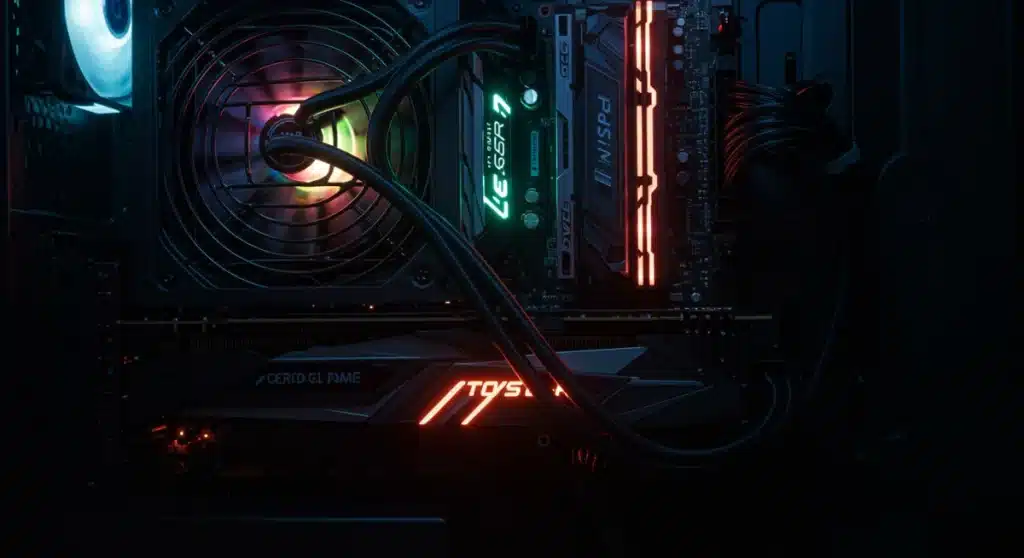
Despite an 850W rating, many current power supply units will likely be insufficient for 2026’s top-tier GPUs due to significant increases in transient power spikes and the adoption of new power delivery standards.
Are you planning your next PC build or considering an upgrade for the cutting-edge GPUs expected in 2026? You might assume your current 850W PSU might be insufficient for 2026’s top GPUs. This article will explain why that seemingly robust 850-watt power supply unit could soon become a bottleneck, delving into the evolving power demands of graphics cards and the crucial considerations for future-proofing your system.
Advertisements
The Escalating Power Demands of Modern GPUs
Graphics processing units have become the undisputed power hogs of any gaming or high-performance PC. Each generation pushes boundaries in rendering capabilities, leading to a proportional increase in power consumption. This trend shows no signs of slowing down, making understanding these demands crucial for any serious builder.
While an 850W PSU has historically been considered ample for high-end systems, the landscape is rapidly shifting. Future GPUs are projected to demand even more, not just in average power draw, but critically, in their ability to handle brief, intense power spikes. These transient loads can overwhelm an inadequately specced PSU, leading to system instability or even shutdowns.
Understanding GPU Power Consumption Trends
Historically, GPU power consumption increased steadily, but recent generations have seen more dramatic jumps. This is driven by several factors, including:
- Increased Core Counts: More processing cores directly translate to higher power needs.
- Advanced Architectures: New designs often allow for greater efficiency but also push performance limits, requiring more power.
- Higher Clock Speeds: Pushing the silicon to its limits demands more energy.
- Ray Tracing and AI Acceleration: These demanding features consume significant power resources.
The continuous drive for higher frame rates and more realistic graphics means that future GPUs will undoubtedly continue this upward trend, making power delivery a primary concern for system stability and longevity.
The implications of this escalating power demand extend beyond simply picking a higher wattage. It involves understanding the quality of power delivery, the efficiency of the PSU, and its ability to respond to dynamic load changes. Without careful consideration, even a seemingly powerful 850W unit could falter under the stress of 2026’s top-tier graphics cards.
Transient Power Spikes: The Silent Killer of Stability
One of the most critical, yet often misunderstood, aspects of modern GPU power consumption is the phenomenon of transient power spikes. These are not sustained power draws but brief, microsecond-long bursts where a GPU can demand significantly more power than its average or TDP (Thermal Design Power) rating. These spikes are a major reason why an 850W PSU might be insufficient for 2026’s top GPUs, even if the average power draw seems manageable.
These spikes occur when the GPU rapidly switches between different operational states, such as going from idle to full load, or during intense scene rendering. While extremely short-lived, their magnitude can be substantial, often exceeding the PSU’s rated continuous power by a significant margin. A PSU that cannot adequately handle these spikes will trigger its over-current protection, leading to sudden system crashes, black screens, or reboots.
Why Transient Spikes Matter More Now
The increasing complexity and clock speeds of modern GPUs exacerbate the transient spike issue. Newer architectures are designed for higher performance, which inherently involves more rapid power state transitions. Older PSUs, or even newer ones not designed to the latest standards, might struggle to deliver the necessary power quickly enough for these brief, intense demands.
- Rapid State Changes: GPUs constantly adjust power states for efficiency, creating frequent spikes.
- High-Frequency Operations: Faster clocks mean more power cycling within a given time.
- Increased Core Density: More cores drawing power simultaneously amplify the peak demand.
A PSU’s ability to handle these spikes is often tied to its internal design, capacitor quality, and overall regulation. Simply looking at the total wattage figure doesn’t tell the whole story. A high-quality 750W PSU might handle spikes better than a low-quality 1000W unit, depending on their respective designs.
Ultimately, neglecting the impact of transient power spikes can lead to a frustrating and unstable computing experience, even with a seemingly powerful power supply. This is a key factor pushing the need for higher wattage and more robust PSU designs.
Introducing ATX 3.0: A New Era for Power Delivery
The industry recognized the growing challenge posed by transient power spikes and the increasing demands of GPUs. This led to the development and adoption of the ATX 3.0 power supply standard, a significant evolution designed to address these very issues. Understanding ATX 3.0 is crucial when considering why your 850W PSU might be insufficient for 2026’s top GPUs.
ATX 3.0 is not just about higher wattage; it’s about smarter, more stable power delivery. It introduces stricter requirements for handling power excursions, specifically mandating that PSUs must be able to withstand 3x their rated power for 100 microseconds on the 12VHPWR connector (12V-2×6 for ATX 3.1) and 2x their rated power for 100 microseconds on the overall power for the graphics card. This means a 600W ATX 3.0 PSU must handle 1800W spikes for a very brief period, something older PSUs were never designed to do.
Key Features and Connectors of ATX 3.0
One of the most visible changes with ATX 3.0 is the introduction of the 12VHPWR connector (now often referred to as 12V-2×6 with ATX 3.1). This new connector is specifically designed to deliver up to 600W of power through a single cable, replacing the need for multiple 8-pin PCIe power connectors. This simplifies cable management and provides a more robust power pathway.
- 12VHPWR/12V-2×6 Connector: A single cable capable of delivering up to 600W, with sense pins for communication between the GPU and PSU.
- Enhanced Transient Response: Stricter specifications for handling power excursions, ensuring stability during peak loads.
- Improved Efficiency at Low Loads: Better efficiency across the entire load range, including very low power states.
- Faster Power On/Off Times: Quicker response times for system power states.
For gamers and PC enthusiasts, this standard means greater confidence in system stability, especially when pairing high-end GPUs with compatible power supplies. While adapters exist for using older PSUs with 12VHPWR cards, a native ATX 3.0 PSU offers the best and most reliable solution, designed from the ground up for the demands of next-gen hardware.
The transition to ATX 3.0 is a fundamental shift in PSU design, directly addressing the power delivery challenges that have emerged with increasingly powerful GPUs. It’s a key indicator of future compatibility and stability.
The Lifespan and Efficiency of Your Current 850W PSU
Even if your 850W PSU technically meets the wattage requirements for a 2026 GPU on paper, its age and efficiency rating play a significant role in its actual performance and longevity. Power supply units, like all electronic components, degrade over time. This degradation can impact their ability to deliver stable power, especially under demanding loads. This is another crucial aspect of why an 850W PSU might be insufficient for 2026’s top GPUs.
The efficiency rating (e.g., 80 Plus Bronze, Gold, Platinum, Titanium) indicates how much power is converted into usable electricity versus how much is lost as heat. While a higher efficiency rating doesn’t directly translate to more available wattage, it signifies a higher quality build with better components, which typically correlates with better transient response and overall stability. An older, less efficient PSU might struggle more, not just in delivering peak power, but also in maintaining consistent voltage under varying loads.
Factors Affecting PSU Lifespan and Performance
Several elements contribute to a PSU’s operational lifespan and its ability to perform optimally:
- Capacitor Degradation: Electrolytic capacitors, vital for stable power delivery, degrade over time, especially with exposure to heat.
- Fan Wear: The cooling fan can wear out, leading to increased internal temperatures and accelerated component degradation.
- Dust Accumulation: Dust acts as an insulator, trapping heat and reducing cooling efficiency.
- Continuous High Loads: Running a PSU consistently near its maximum capacity can shorten its lifespan.
An aging PSU, even a high-wattage one, might have reduced capacity and less stable voltage regulation than when it was new. This can manifest as intermittent crashes, unexplained system instability, or even damage to other components, particularly sensitive ones like GPUs. Investing in a new, high-quality PSU is often a more cost-effective solution in the long run than risking damage to expensive components with an unreliable older unit.
Considering the demands of 2026’s GPUs, assessing the age and quality of your existing 850W PSU is paramount. A fresh, modern unit with an ATX 3.0 certification and a strong efficiency rating will offer both peace of mind and superior performance.
Calculating Your True Power Needs for Future Builds
Estimating the power requirements for a future PC build, especially with components like 2026’s top GPUs, involves more than just adding up the TDP figures. You need to account for peak loads, system efficiency, and future upgrade headroom. This careful calculation is essential to ensure your 850W PSU might be insufficient for 2026’s top GPUs, or if you need to upgrade.
Manufacturers often provide recommended PSU wattages for their graphics cards, but these are typically minimums and don’t always factor in transient spikes or a fully loaded system with multiple drives, RGB lighting, and overclocked CPUs. A general rule of thumb is to calculate the sum of your CPU and GPU TDPs, then add about 100-150W for other components, and finally, add a buffer of 20-30% for headroom and transient spikes. However, with modern GPUs, this buffer needs to be more substantial, often requiring an ATX 3.0 compliant unit specifically designed for these excursions.
Tools and Considerations for PSU Sizing
Several online PSU calculators can provide a good starting point, but always consider them as estimates. They rarely account for the specific transient power characteristics of future GPUs. When sizing your PSU, keep these points in mind:
- CPU Power (TDP): High-end CPUs can draw significant power, especially when overclocked.
- GPU Power (TDP & Peak): Focus not just on average TDP but also on potential peak transient loads.
- Other Components: Motherboard, RAM, SSDs, HDDs, fans, and RGB all consume power.
- Future Upgrades: A larger PSU now can save you from buying another one later if you upgrade components.
- Efficiency Curve: PSUs are most efficient at around 50-60% load. Sizing your PSU to operate within this range can improve efficiency and reduce heat.
For example, if a 2026 GPU has an average TDP of 450W and your CPU draws 200W, an 850W PSU might seem sufficient (450+200+100 for other components = 750W). However, if that GPU can spike to 1350W for microsecond durations (as per ATX 3.0 3x excursion spec), an older 850W unit will likely trip its protection. A native ATX 3.0 850W PSU, designed to handle those spikes, would be a much safer bet, but even then, a higher wattage (e.g., 1000W) might offer more comfort and longevity.
Careful calculation and an understanding of modern power delivery standards are crucial for making an informed decision about your PSU, moving beyond simple wattage numbers.
Future-Proofing Your PC: Beyond Just Wattage
Future-proofing your PC build, especially the power supply, involves looking beyond just the headline wattage number. It’s about investing in a unit that can reliably support upcoming hardware generations, handle evolving power delivery standards, and provide stability for years to come. Recognizing that your 850W PSU might be insufficient for 2026’s top GPUs is the first step towards a truly future-proof system.
A truly future-proof PSU will likely be ATX 3.0 compliant (or later versions as they emerge), feature a high efficiency rating (Gold, Platinum, or Titanium), and offer sufficient wattage headroom for potential component upgrades. It’s also wise to consider modular cabling, which improves airflow and simplifies cable management, making future upgrades easier.
Key Considerations for a Future-Proof PSU
When selecting a power supply with an eye towards the future, prioritize these aspects:
- ATX 3.0/3.1 Compliance: Essential for handling transient power spikes and native 12V-2×6 (12VHPWR) connectivity for next-gen GPUs.
- Efficiency Rating (80 Plus Gold or Higher): Indicates better component quality, less heat generation, and often better transient response.
- Reputable Brand: Stick with brands known for quality control, reliable performance, and strong warranties.
- Wattage Headroom: Aim for a PSU that provides 20-30% more wattage than your calculated peak system draw to allow for upgrades and optimal efficiency.
- Modular Design: While not performance-related, modular cables significantly improve build experience and airflow.
For systems targeting 2026’s high-end GPUs, a 1000W or even 1200W ATX 3.0 certified PSU is becoming the recommended baseline for optimal performance and stability. While an 850W ATX 3.0 unit might technically work, the higher wattage provides a larger buffer against unforeseen power demands and allows for more aggressive overclocking or future component changes without needing another PSU upgrade.
Investing in a high-quality, future-ready PSU now can save significant hassle and potential cost down the line, ensuring your expensive components run optimally for their entire lifespan.
When is an 850W PSU Still Enough?
While the focus has been on why an 850W PSU might be insufficient for 2026’s top GPUs, it’s important to acknowledge that for many users, an 850W unit can still be perfectly adequate. The key lies in understanding your specific use case and the components you plan to pair with it. Not everyone needs the absolute bleeding edge of GPU technology, and for more mainstream or even high-end but not ultra-enthusiast builds, 850W can still deliver reliable power.
An 850W PSU, especially a modern ATX 3.0 compliant one, will likely be sufficient for mid-range to upper-mid-range GPUs expected in 2026. It could also power last-generation’s flagship GPUs or current high-end cards without issue. If your build prioritizes a balanced performance-to-cost ratio rather than maximum raw power, an 850W unit often hits a sweet spot, providing ample power without unnecessary expense.
Scenarios Where 850W Holds Strong
- Mid-Range to High-End GPUs: For GPUs that aren’t the absolute top-tier flagships, an 850W PSU (especially ATX 3.0) should provide plenty of headroom.
- Efficient CPUs: Pairing with a CPU known for its power efficiency (e.g., lower TDP Intel i5/i7 or AMD Ryzen 5/7) reduces overall system draw.
- No Extreme Overclocking: If you’re not pushing your CPU and GPU to their absolute limits with aggressive overclocking, power demands will be more predictable.
- Older Flagship GPUs: For users upgrading to a previous generation’s top-tier GPU, an 850W unit is likely more than enough.
The crucial distinction is between an older 850W unit and a brand-new, ATX 3.0 certified 850W unit. The latter will have the necessary transient power handling capabilities, making it a far more viable option for many modern and even near-future systems, provided you’re not aiming for the absolute highest-tier components. Always check the specific power recommendations for the GPU you intend to purchase and factor in the quality and age of your PSU.
In conclusion, while the most demanding future GPUs will push past 850W, this wattage remains a strong contender for a broad spectrum of gaming and productivity systems, particularly when adhering to modern PSU standards.
| Key Point | Brief Description |
|---|---|
| Escalating GPU Power | Future GPUs demand significantly more power, especially due to increased core counts and advanced architectures. |
| Transient Power Spikes | Brief, intense power demands from GPUs can overwhelm older PSUs, causing instability or crashes. |
| ATX 3.0 Standard | New PSU standard (with 12V-2×6 connector) specifically designed to handle next-gen GPU power excursions. |
| Future-Proofing | Beyond wattage, consider ATX 3.0 compliance, efficiency, and headroom for future upgrades. |
Frequently Asked Questions About PSUs and Future GPUs
Modern GPUs integrate more cores, higher clock speeds, and specialized hardware for features like ray tracing and AI acceleration. This increased complexity and performance directly translate to higher power consumption, pushing the boundaries of traditional power delivery systems and requiring more robust PSUs.
Transient power spikes are very brief, intense bursts of power demand that occur when a GPU rapidly changes its operational state. Older PSUs struggle to deliver this sudden surge of power, leading to system instability, crashes, or reboots, even if the average wattage seems sufficient.
ATX 3.0 is a new power supply standard designed to handle the high transient power spikes of modern GPUs. It mandates that PSUs withstand 3x their rated power for short durations and introduces the 12V-2×6 connector, ensuring stable and efficient power delivery for next-generation graphics cards.
While adapters exist to connect older PSUs to GPUs requiring the 12V-2×6 (12VHPWR) connector, they are not ideal. Adapters don’t magically grant an older PSU ATX 3.0 compliance or its transient handling capabilities, potentially leading to instability. A native ATX 3.0 PSU is always the recommended and most reliable solution.
For a high-end PC targeting 2026’s top GPUs, a high-quality, ATX 3.0 compliant PSU of 1000W or 1200W is becoming the recommended baseline. This provides ample headroom for peak power demands, future upgrades, and ensures optimal system stability, particularly with power-hungry components.
Conclusion
The landscape of PC power delivery is rapidly evolving, driven by the insatiable demands of modern graphics cards. While an 850W PSU once represented a robust choice for gaming systems, the emergence of significant transient power spikes and the new ATX 3.0 standard mean that your 850W PSU might be insufficient for 2026’s top GPUs. Future-proofing your build requires a holistic approach, considering not just raw wattage but also the PSU’s ability to handle dynamic loads, its efficiency, and its compliance with the latest power delivery specifications. Investing in a high-quality, ATX 3.0 certified power supply with adequate headroom is no longer just an enthusiast’s luxury but a pragmatic necessity for a stable and long-lasting high-performance PC.