Next-Gen Gaming Monitors 2026: 240Hz+ OLED Displays
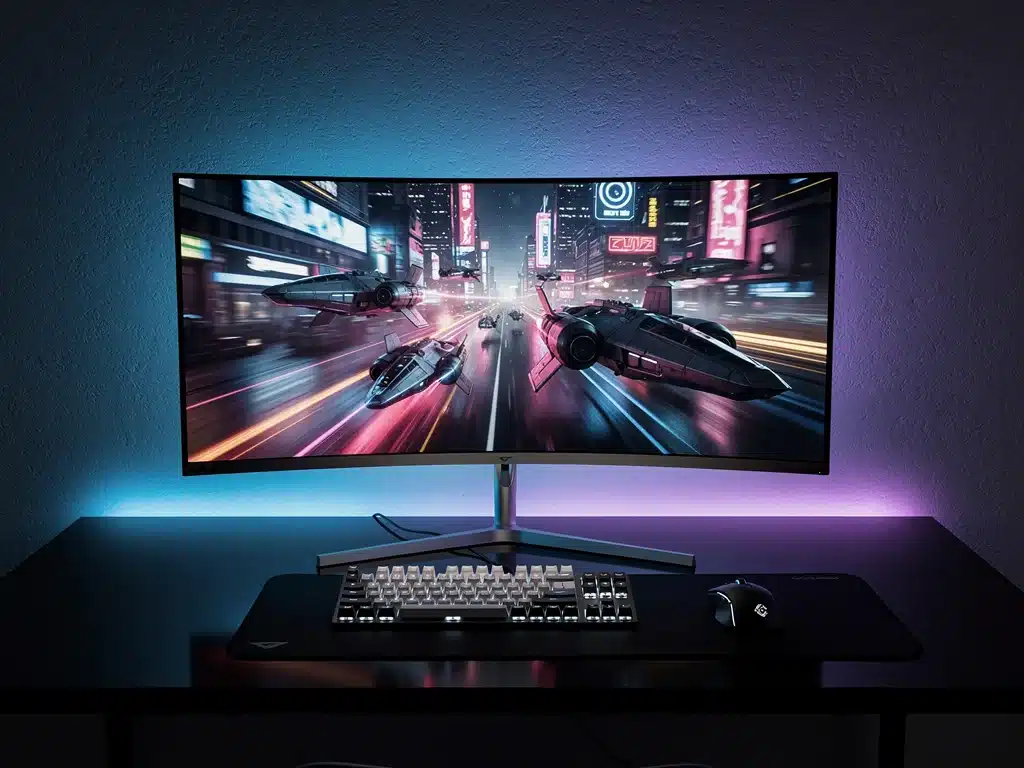
OLED displays are positioned to reshape gaming monitors as manufacturers pursue faster response times, higher refresh rates, and stronger image quality. These advances could deliver smoother motion, deeper contrast, and more immersive visuals.
New panel designs are also improving brightness, color accuracy, and durability while reducing concerns such as burn-in. Competitive players may benefit from lower input latency and clearer motion during fast-paced games.
For gamers considering an upgrade, refresh rate, resolution, panel type, warranty coverage, and burn-in protection remain important factors. Understanding these developments can help buyers choose displays that match both performance needs and long-term value.
The Dawn of 240Hz+ OLED Displays: A New Era for Gaming
The progression toward 240Hz+ OLED displays represents a monumental leap for gaming monitors, promising an unrivaled visual experience. This technology combines the inherent benefits of OLED with refresh rates previously confined to less visually impressive panel types.
Advertisements
Gamers can anticipate incredibly fluid motion, virtually instantaneous pixel response times, and perfect blacks, elevating immersion and competitive performance. This convergence marks a significant milestone in display technology, setting the stage for the next generation of gaming.
Manufacturers are aggressively pursuing this frontier, with several prototypes already demonstrating the potential of these high-refresh-rate OLED panels. The market is preparing for a wave of products that will redefine what is considered a premium gaming display.
Unprecedented Smoothness and Clarity

OLED panels with refresh rates of 240Hz or higher can deliver exceptional motion clarity and reduce visible ghosting during fast gameplay. This is especially valuable in competitive titles where rapid reactions and precise tracking matter.
Because each OLED pixel produces its own light, response times are extremely fast. Pixels can change state almost instantly, helping moving objects appear sharper and more defined.
The combination of high refresh rates and near-instant pixel response creates a smoother, cleaner image. For gamers, this can improve visual awareness and make fast-paced action feel more responsive.
OLED’s Core Advantages Amplified
- Perfect Blacks: Each pixel can be individually turned off, providing infinite contrast and true black levels.
- Vibrant Colors: OLED technology offers a wider color gamut and exceptional color accuracy, bringing game worlds to life.
- Instant Response Times: Near-zero pixel response times eliminate motion blur, crucial for high-speed gaming.
The integration of these core OLED advantages with ultra-high refresh rates creates a display that not only looks stunning but also performs with unmatched precision. This synergy is central to the appeal of Next-Gen Gaming Monitors 2026.
Micro-LED Technology: The Ultimate Brightness and Longevity Solution
Micro-LED technology is emerging as a formidable contender for next-gen gaming monitors, addressing some of the historical limitations of OLED, particularly concerning brightness and potential burn-in. This technology utilizes microscopic LEDs to form individual pixel elements, offering superior luminance and durability.
While still in its early stages for consumer-grade monitors, Micro-LED promises to deliver the best of both worlds: the pixel-level control of OLED with the brightness and longevity of traditional LCDs. Its development is a key area for OLED Displays.
The potential for high dynamic range (HDR) content with Micro-LED is immense, as it can achieve incredibly high peak brightness levels without compromising black levels. This makes it an ideal candidate for truly immersive HDR gaming experiences.
Overcoming OLED Challenges with Micro-LED
Micro-LED technology uses inorganic light-emitting materials, which can reduce the risk of permanent image retention compared with OLED panels. This makes it especially attractive for games with static HUDs, menus, and interface elements.
Micro-LED displays can also reach much higher brightness levels, improving visibility in well-lit rooms. Stronger peak brightness can make highlights, reflections, and other HDR effects appear more intense.
By combining durability, brightness, and precise pixel-level lighting, Micro-LED offers significant potential for premium gaming displays. However, cost, manufacturing complexity, and limited availability remain important challenges.
Key Benefits of Micro-LED for Gaming
- Exceptional Brightness: Enables stunning HDR performance and visibility in well-lit rooms.
- Burn-in Resistance: Inorganic LEDs offer superior longevity and peace of mind for gamers.
- Modular Design Potential: Allows for flexible display sizes and configurations, potentially leading to innovative form factors.
The ongoing refinement of Micro-LED manufacturing processes will be crucial for its widespread adoption in next-gen gaming monitors. Its promise of ultimate visual performance without compromise is a major draw.
Advanced Quantum Dot Integration: Enhancing Color and Brightness
Quantum Dot (QD) technology has already made significant strides in display quality, but its advanced integration into next-gen gaming monitors is set to push boundaries further. By combining QD layers with OLED or Mini-LED backlighting, manufacturers are achieving unparalleled color volume and peak brightness.
This hybrid approach leverages the strengths of each technology, resulting in displays that offer both the deep blacks of OLED and the vibrant colors and brightness associated with Quantum Dots. This is a crucial element of OLED Displays.
The goal is to create a more immersive and visually accurate gaming environment, where colors are more lifelike and scenes possess greater depth and realism. Advanced QD integration is pivotal for this next wave of monitors.
QD-OLED and QD-Mini-LED Synergy
QD-OLED panels use Quantum Dots to convert blue OLED light into a broader range of colors. This improves color purity, brightness, and efficiency while preserving OLED’s deep black levels.
QD-Mini-LED displays combine a Mini-LED backlight with a Quantum Dot layer. Multiple local dimming zones help control contrast and deliver stronger peak brightness for HDR gaming.
These hybrid technologies expand the options available to gamers seeking vivid colors, high contrast, and responsive performance. Their continued development is pushing the gaming display market toward brighter and more immersive experiences.
Variable Refresh Rate (VRR) Evolution: Beyond FreeSync and G-Sync
While Variable Refresh Rate (VRR) technologies like AMD FreeSync and NVIDIA G-Sync have become standard, their evolution in next-gen gaming monitors will bring even greater sophistication and compatibility. We are moving towards more universally adopted VRR standards that offer seamless performance across diverse hardware configurations.
This next phase of VRR aims to eliminate screen tearing and stuttering more effectively, even at the extremely high refresh rates of 240Hz+ OLED displays. The focus is on robust, future-proof solutions that ensure a consistently smooth gaming experience.
As part of OLED Displays, optimized VRR is not just about preventing visual artifacts but also about ensuring minimal input lag and maximum responsiveness.
Universal VRR Standards and Enhanced Performance
Standards such as HDMI 2.1 VRR and DisplayPort with Adaptive-Sync can improve compatibility across monitors, graphics cards, and gaming systems. Broader support may reduce dependence on proprietary variable refresh rate technologies.
Improved hardware integration and display algorithms can help VRR function across a wider frame-rate range. This allows the screen to adjust more effectively when game performance rises or falls.
As a result, players may experience less screen tearing, stuttering, and visual disruption during sudden frame drops. More consistent VRR performance can make gameplay appear smoother and more responsive.
The Impact on Competitive Gaming
- Eliminated Tearing: Ensures a consistently smooth image without distracting visual artifacts.
- Reduced Stutter: Matches display refresh rate to GPU output, preventing jarring frame rate inconsistencies.
- Lower Input Lag: Optimized VRR implementations contribute to a more responsive feel, crucial for competitive play.
The continuous refinement of VRR is essential for fully leveraging the capabilities of ultra-high refresh rate panels, making it a cornerstone of next-gen gaming monitors.
AI-Powered Upscaling and Image Processing: Sharper Visuals, Less Load
Artificial Intelligence (AI) is set to play a transformative role in next-gen gaming monitors, particularly through AI-powered upscaling and image processing technologies. These innovations aim to deliver sharper, more detailed visuals without demanding excessive resources from the GPU.
By intelligently enhancing lower-resolution content, AI upscaling can make games look stunning even when rendered at less demanding settings, providing a performance boost. This is a crucial area of development for OLED Displays.
Monitor manufacturers are beginning to integrate dedicated AI processors directly into displays, allowing for real-time image analysis and enhancement. This offloads tasks from the GPU, freeing up resources for higher frame rates.
Beyond GPU-Based Upscaling
AI-powered upscaling built directly into monitors can improve image quality without depending on a specific GPU or game. Unlike technologies such as DLSS and FSR, the processing occurs inside the display itself.
This approach could benefit console players and users with older graphics cards by sharpening lower-resolution content before it appears on screen. The feature may also work across a wider range of games and video sources.
By handling part of the visual enhancement process, the monitor becomes more involved in the final image output. Input latency, processing artifacts, and compatibility will remain important factors for gamers to evaluate.
Benefits of On-Monitor AI Processing
- Universal Compatibility: Enhances visuals from any source, including consoles and older PCs.
- Reduced GPU Load: Frees up GPU resources for higher frame rates or more complex graphical settings.
- Real-Time Optimization: AI algorithms adapt and refine image quality on the fly, delivering optimal visuals.
The integration of AI into gaming monitors represents a significant step towards more intelligent and efficient display technologies, solidifying its place among Next-Gen Gaming Monitors 2026.
Ergonomics and Smart Features: Enhancing the User Experience
Beyond raw panel technology, next-gen gaming monitors arriving in 2026 will also prioritize advanced ergonomics and smart features, designed to enhance the overall user experience. This includes adaptive lighting, integrated sound solutions, and intuitive control mechanisms.
These features aim to create a more comfortable, immersive, and personalized gaming environment. They reflect a growing understanding that a premium gaming experience extends beyond just the display panel itself.
Manufacturers are focusing on holistic design, ensuring that these high-performance displays are also user-friendly and adaptable to various gaming setups. The evolution of ergonomics is key to OLED Displays.
Adaptive Lighting and Integrated Audio
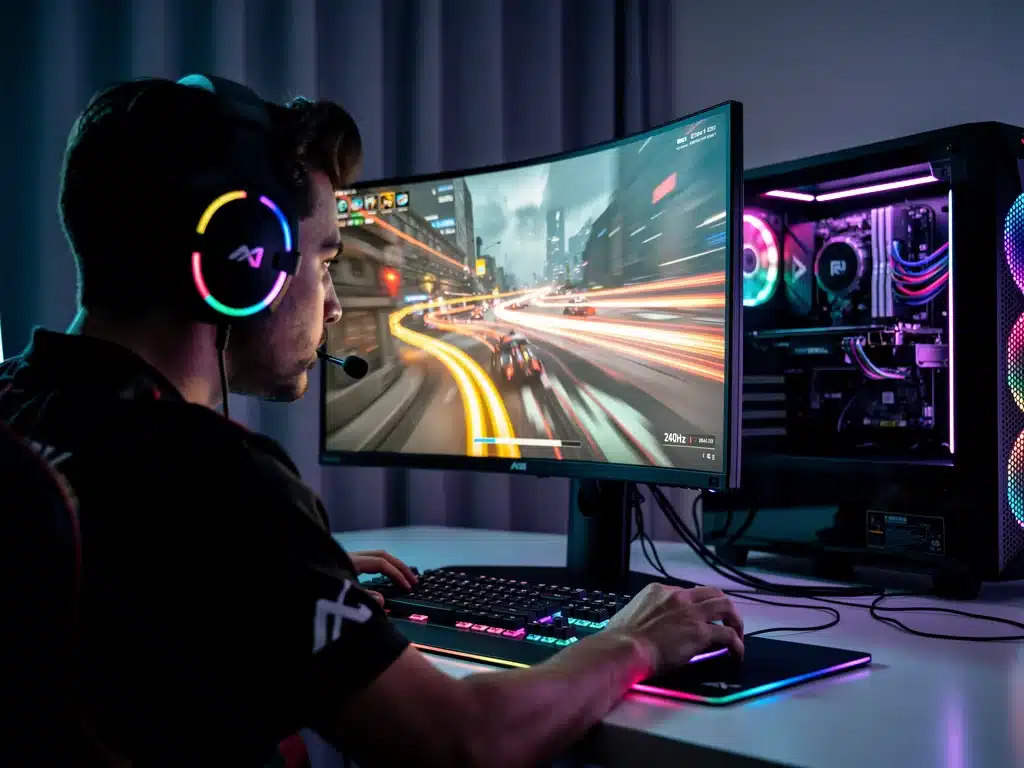
Gaming monitors are increasingly expected to include adaptive bias lighting that reacts to on-screen content. This can reduce eye strain, improve perceived contrast, and create a more immersive viewing environment.
Integrated audio systems are also becoming more advanced, with some displays offering stronger speakers and spatial sound capabilities. These features may reduce the need for separate audio equipment in casual gaming setups.
By combining visual comfort, responsive lighting, and better sound, monitors are evolving into more complete entertainment hubs. This can simplify desk organization while improving the overall gaming experience.
Intuitive Controls and Connectivity
- Smart KVM Switches: Seamlessly switch between multiple devices connected to the monitor without re-plugging peripherals.
- Voice Control & AI Assistants: Control monitor settings and access features using voice commands for convenience.
- USB-C Power Delivery: Simplify connectivity for laptops and other devices with single-cable solutions.
These smart features are designed to make the daily interaction with gaming monitors more fluid and enjoyable, complementing the advanced display technologies.
| Key Technology | Brief Description |
|---|---|
| 240Hz+ OLED Displays | Ultra-high refresh rates combined with perfect blacks and instant response times of OLED. |
| Micro-LED Technology | Superior brightness, burn-in resistance, and modularity for future-proof displays. |
| Advanced Quantum Dot | Hybrid QD-OLED/Mini-LED for enhanced color volume and peak brightness. |
| AI-Powered Upscaling | Monitor-side AI for sharper visuals and reduced GPU load, compatible with any source. |
Frequently Asked Questions about Next-Gen Gaming Monitors 2026
The primary advantage is the combination of incredibly fluid motion from ultra-high refresh rates with the perfect blacks and instantaneous pixel response times inherent to OLED technology. This virtually eliminates motion blur and ghosting, offering superior clarity and immersion for competitive and casual gamers alike.
Micro-LED technology uses inorganic LEDs, which makes it highly resistant to burn-in, a potential concern for OLED panels with static elements. Additionally, Micro-LEDs can achieve significantly higher peak brightness levels, enhancing HDR content and making displays more suitable for bright viewing environments.
While next-gen monitors will support current GPU standards like HDMI 2.1 and DisplayPort 1.4, newer GPUs with DisplayPort 2.0 will be ideal for fully utilizing ultra-high refresh rates at higher resolutions. AI-powered upscaling on monitors can also help older GPUs deliver improved visuals without excessive performance demands.
AI will be integrated for advanced image processing, including universal upscaling and optimization, directly within the monitor. This offloads tasks from the GPU, leading to sharper visuals and potentially higher frame rates, regardless of the source device or game, enhancing the overall visual experience.
Expect significant advancements in ergonomics and smart features, such as adaptive bias lighting to reduce eye strain, high-quality integrated spatial audio, and smart KVM switches for seamless multi-device connectivity. Voice control and AI assistants are also anticipated for more intuitive user interaction.
Looking Ahead: The Future Impact of Next-Gen Gaming Monitors 2026
The impending arrival of OLED Displays signifies a pivotal moment for the gaming industry. These advancements promise not just incremental improvements, but a fundamental shift in how we perceive and interact with digital worlds. Gamers should pay close attention to product announcements and independent reviews as these technologies mature.
The competitive landscape among display manufacturers will intensify, driving innovation even further beyond 2026. This means more choices and increasingly sophisticated features for consumers, pushing the boundaries of visual excellence and responsiveness.
Ultimately, the impact of these Next-Gen Gaming Monitors 2026 will extend beyond mere specifications, influencing game development, esports, and the broader digital entertainment ecosystem. The future of immersive gaming is bright, fast, and incredibly detailed.