Practical Solutions for US Amateur Teams: 2026 LoL Clash Success
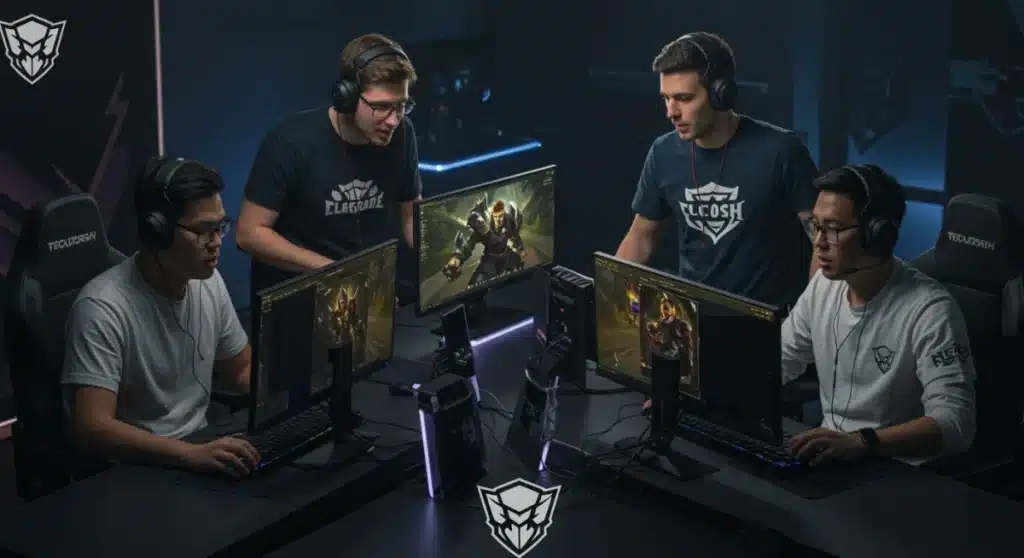
Achieving success in the 2026 League of Legends Clash tournaments for US amateur teams hinges on structured practice, deep strategic understanding, effective communication, adaptability, and fostering strong team synergy.
For US amateur teams eyeing the 2026 League of Legends Clash tournaments, the path to victory can seem daunting. However, with the right approach and dedicated effort, maximizing your chances is entirely within reach. This guide delves into Practical Solutions for US Amateur Teams: Maximizing Your Chances in the 2026 League of Legends Clash Tournaments with 5 Key Strategies, offering actionable insights to elevate your gameplay and team cohesion.
Advertisements
Establishing a Strong Team Foundation and Culture
The bedrock of any successful esports team, especially in a competitive environment like League of Legends Clash, is a robust team foundation and a positive culture. This goes beyond simply having five players; it involves cultivating an environment where trust, respect, and mutual goals thrive. Without this, even the most mechanically skilled players will struggle to perform optimally under pressure.
A strong team culture encourages open communication, constructive criticism, and shared responsibility. It ensures that every member feels valued and understands their role within the team. This collective understanding is vital for quick decision-making and seamless execution during intense in-game moments.
Defining Roles and Responsibilities
Clarity in roles is paramount. Every player needs to understand not just their primary role (e.g., Top Lane, Jungle, Mid Lane, ADC, Support) but also their specific responsibilities within that role and how it interacts with the team’s overall strategy. This prevents confusion and allows for more focused individual improvement.
- Clearly assign primary and secondary roles: Ensure each player specializes while also having a backup champion pool for flexibility.
- Establish shot-caller and engage-caller roles: Designate who makes strategic decisions and who initiates team fights to avoid miscommunication.
- Define out-of-game responsibilities: Assign duties like schedule management, VOD review lead, or research tasks to distribute workload.
By clearly defining these aspects, teams can streamline their practice, reduce internal conflicts, and build a more efficient unit capable of adapting to various in-game scenarios. This structured approach to team roles creates a more predictable and reliable performance across different matches.
Cultivating Positive Communication and Trust
Effective communication is the lifeblood of a League of Legends team. It’s not just about sharing information but doing so clearly, concisely, and respectfully. Trust within the team ensures that calls are followed without hesitation and that feedback is received positively.
Practicing communication in low-pressure environments can help build this habit. Regular discussions about in-game decisions, both good and bad, foster an atmosphere where learning is prioritized over blame. This psychological safety allows players to take risks and learn from mistakes without fear of judgment.
In conclusion, building a strong team foundation and culture sets the stage for everything else. It creates the necessary synergy and understanding that allows a group of individual players to function as a cohesive, formidable unit in the competitive arena of Clash.
Mastering Strategic Depth and Champion Pools
Beyond individual mechanics, a deep understanding of game strategy and a versatile champion pool are critical for any amateur team aspiring to succeed in the 2026 Clash tournaments. The meta constantly shifts, and teams that can adapt and innovate will always have an edge. This involves not just knowing what champions are strong, but understanding *why* they are strong and how they fit into different team compositions.
Strategic depth encompasses draft knowledge, understanding win conditions, and adapting game plans on the fly. A limited champion pool or a rigid approach to strategy makes a team predictable and easily countered by more prepared opponents. Expanding these horizons is a continuous process that yields significant dividends.
Developing Diverse Champion Pools
A shallow champion pool is a liability. Opponents can easily ban out key picks or force players onto unfamiliar champions, severely hindering performance. Each player should aim to master at least 3-5 champions for their primary role, covering different archetypes and playstyles.
- Balance early-game and late-game champions: Have options for aggressive early game compositions and scaling compositions.
- Include champions with different utility: Ensure access to picks with engage, disengage, poke, and sustain.
- Practice off-meta picks: Sometimes, a niche pick can surprise opponents and exploit their lack of familiarity.
Regularly reviewing patch notes and professional play can help identify emerging strong champions and strategies. Integrating new champions into practice slowly, rather than all at once, allows for a smoother learning curve and better retention of mechanics and matchups.
Crafting and Adapting Game Plans
Every game of League of Legends presents unique challenges. A successful team doesn’t just have one game plan; it has multiple, and the ability to adapt them based on the draft and early game. This requires a strong understanding of macro-level decision-making and objective control.
Teams should practice various compositions, including those focused on split-pushing, team fighting, and siege. Understanding how to play around different power spikes and objective timings is also vital. This strategic flexibility allows teams to pivot when their initial plan isn’t working or when the enemy team makes an unexpected move.
In essence, mastering strategic depth and champion pools transforms a team from reactive to proactive. It allows them to dictate the pace of the game, exploit enemy weaknesses, and consistently pursue their win conditions, making them a much tougher opponent in any Clash tournament.
Optimizing Practice Schedules and VOD Review
Consistent, high-quality practice is non-negotiable for any team aiming for competitive success. However, it’s not just about playing many games; it’s about playing with purpose and learning from every experience. An optimized practice schedule combined with thorough VOD (Video On Demand) review sessions is the most effective way to identify weaknesses, refine strategies, and accelerate team improvement.
Many amateur teams fall into the trap of simply queueing up without a clear goal. This can lead to stagnation. Structured practice ensures that every session contributes meaningfully to the team’s overall development, transforming raw playtime into tangible progress.
Structured Practice Sessions
A well-designed practice schedule considers both individual skill development and team synergy. It balances scrims against other teams with internal drills and specific focus areas. Randomly playing ranked games together is not a substitute for targeted practice.
- Set clear goals for each practice session: Focus on specific aspects like early game warding, objective control, or team fight execution.
- Incorporate custom game drills: Practice specific scenarios, such as 5v5 mid-lane team fights or baron contests, to refine mechanics and coordination.
- Schedule regular scrims: Playing against other organized teams is crucial for testing strategies and identifying areas for improvement under pressure.
Maintaining a consistent schedule helps build routine and commitment, ensuring all members are aligned and prepared for each session. This consistency also fosters a sense of discipline, which is essential for long-term competitive growth.
Effective VOD Review Techniques
VOD review is arguably the most powerful tool for improvement. It allows teams to objectively analyze their gameplay, pinpoint mistakes, and understand the consequences of their decisions without the heat of the moment. However, VOD review must be structured to be effective.
Instead of just watching the game, teams should actively pause, discuss, and identify alternative plays. Focus on key moments like early game invades, objective trades, and team fights. It’s important to foster an environment where players can openly discuss their perspectives without fear of blame, focusing on collective learning.
By optimizing practice schedules and implementing rigorous VOD review, US amateur teams can significantly accelerate their learning curve. This deliberate approach to improvement ensures that every hour spent playing or analyzing contributes directly to their performance in the 2026 Clash tournaments, turning potential into tangible results.
Enhancing In-Game Adaptability and Shot-Calling
League of Legends is a dynamic game where no two matches are exactly alike. The ability to adapt to unforeseen circumstances, enemy strategies, and fluctuating game states is a hallmark of truly strong teams. Coupled with effective shot-calling, adaptability allows teams to pivot their game plan, exploit enemy missteps, and secure victories even when the initial strategy falters. This flexibility is crucial for navigating the diverse challenges presented by Clash tournaments.
A team that can only execute one plan is easily defeated once that plan is disrupted. Developing the capacity to react, adjust, and make informed decisions in real-time is what separates good teams from great ones.
Developing Adaptive Strategies Mid-Game
Adaptability isn’t just about reacting to enemy plays; it’s about proactively adjusting your own strategy based on the current game state, champion power spikes, and objective timers. This requires keen game sense from all players and the ability to communicate changes quickly.
- Recognize win conditions: Constantly re-evaluate your team’s current win conditions and compare them to the enemy’s.
- Identify power spikes: Understand when your champions and the enemy’s champions are strongest and weakest.
- Flexibility in objective priority: Be willing to switch focus from Dragon to Baron, or vice versa, if the opportunity arises.
Practicing different game states in custom games or scrims can help teams develop this reactive thinking. Simulating scenarios where the team is significantly ahead or behind can prepare them for a wider range of in-game challenges, fostering a more resilient mindset.
Refining Shot-Calling Efficiency
Effective shot-calling is the brain of the team, guiding movements, objective priorities, and engagement timings. It needs to be clear, concise, and timely. In a high-pressure environment like Clash, indecisiveness or conflicting calls can lead to catastrophic mistakes.
Designating a primary shot-caller and a secondary one (who can step in if the primary is indisposed or needs to focus on mechanics) ensures there’s always a clear voice. Practice with specific callouts and abbreviations to reduce communication time. Post-game discussions should always include feedback on shot-calling, identifying moments of clarity and confusion to refine the process.
By consistently working on in-game adaptability and refining shot-calling, US amateur teams can transform their reactive capabilities into a powerful competitive advantage. This mastery allows them to maintain control and make smart decisions regardless of how the game unfolds, significantly boosting their chances in the 2026 Clash tournaments.
Mental Fortitude and Team Cohesion
In competitive League of Legends, especially in tournament formats like Clash, mental fortitude is just as crucial as mechanical skill or strategic prowess. The ability to maintain composure under pressure, bounce back from setbacks, and support teammates through challenging moments can often be the deciding factor between victory and defeat. Team cohesion—the unity and mutual support among players—directly impacts this mental resilience.
Even the most skilled teams can crumble if their mental game isn’t strong. Addressing this aspect proactively is a key strategy for maximizing success in the 2026 Clash tournaments, ensuring that the team performs optimally even when faced with adversity.
Building Mental Resilience
League of Legends is a game of highs and lows. Gold leads can disappear, early advantages can be thrown, and individual mistakes are inevitable. A strong mental game involves accepting these realities and not letting them derail the entire match. This resilience is built through practice, reflection, and a supportive team environment.
- Practice mindfulness: Encourage players to stay present and focused on the current game state, rather than dwelling on past mistakes.
- Develop coping mechanisms for Tilt: Discuss strategies for managing frustration and preventing it from spreading to the rest of the team.
- Focus on process over outcome: Emphasize making good decisions and executing the game plan, rather than solely fixating on the win/loss.
Regularly discussing mental health and stress management within the team can create an open dialogue. This helps players feel comfortable sharing their struggles and seeking support, reinforcing the team’s collective strength.
Fostering Team Cohesion and Support
A cohesive team is one where players genuinely care about each other’s success and well-being. This translates into better communication, trust, and a willingness to sacrifice for the collective good. Team building activities, both in-game and out-of-game, can significantly strengthen these bonds.
Celebrating successes together and providing constructive, empathetic feedback during losses builds a stronger, more resilient unit. Understanding each other’s personalities and playstyles helps in better anticipating actions and reacting positively to unexpected situations. The shared experience of working towards a common goal also naturally fosters a sense of camaraderie that is invaluable in competitive play.
Ultimately, mental fortitude and strong team cohesion provide the emotional and psychological framework for consistent high-level performance. By investing in these areas, US amateur teams can ensure they are not only strategically sound but also mentally prepared to face and overcome the pressures of the 2026 Clash tournaments, giving them a significant edge over less unified opponents.
Leveraging Data Analysis and External Resources
In the evolving landscape of esports, simply playing the game is no longer enough. To truly maximize their chances in the 2026 League of Legends Clash tournaments, US amateur teams must embrace data analysis and effectively utilize the wealth of external resources available. This analytical approach moves beyond anecdotal evidence, providing concrete insights into individual performance, team tendencies, and opponent strategies. It transforms guesswork into informed decision-making.
The ability to interpret data and integrate external knowledge into practice and game plans offers a significant competitive advantage. Teams that ignore these tools risk falling behind those who actively seek to understand and apply them.
Utilizing Performance Data
Numerous platforms offer detailed statistics on individual and team performance. Analyzing metrics beyond KDA, such as vision score, objective control rate, damage dealt to champions, and damage taken, can reveal crucial insights into strengths and weaknesses.
- Track individual performance metrics: Identify areas where players excel or struggle, allowing for targeted improvement.
- Analyze team-wide statistics: Look for patterns in objective control, team fight win rates, and early game gold differentials to refine macro strategy.
- Compare against benchmarks: Use data from higher-ranked teams or professional play to set realistic goals and identify optimal performance levels.
Regularly reviewing this data, perhaps weekly or bi-weekly, allows teams to track their progress and adjust their practice focus accordingly. This data-driven approach provides an objective measure of improvement and helps in identifying persistent issues that might not be obvious during gameplay.
Harnessing External Coaching and Resources
The internet is brimming with high-quality League of Legends content, from professional player streams and coaching videos to in-depth guides and community forums. Leveraging these resources can provide fresh perspectives and accelerate learning. Furthermore, considering an external coach, even for a limited period, can offer invaluable objective feedback.
An experienced coach can identify blind spots, provide structured learning plans, and help with VOD review. They can also offer insights into meta shifts and advanced strategies that amateur teams might miss. Engaging with the wider League of Legends community through forums or Discord servers can also provide opportunities for scrims and shared learning experiences.
By leveraging performance data and external resources, US amateur teams in 2026 Clash tournaments can move beyond intuitive decision-making to a more scientific and strategic approach. This commitment to continuous learning and data-informed improvement significantly enhances their chances of outperforming competitors and securing victories.
| Key Strategy | Brief Description |
|---|---|
| Team Foundation | Build trust, define roles, and cultivate open communication for cohesive play. |
| Strategic Depth | Develop diverse champion pools and adapt game plans based on meta and opponent. |
| Optimized Practice | Implement structured sessions and thorough VOD reviews for targeted improvement. |
| Mental Fortitude | Foster resilience and cohesion to perform under pressure and recover from setbacks. |
Frequently Asked Questions About LoL Clash Success
Team cohesion and communication are arguably the most crucial aspects. While individual skill is important, a team that can effectively communicate, trust each other, and adapt together will consistently outperform a group of highly skilled but uncoordinated players. It’s the foundation for all other strategies.
Ideally, teams should aim for 3-4 structured practice sessions per week, each lasting 2-3 hours. This should include scrims against other teams, custom game drills focusing on specific mechanics or scenarios, and dedicated VOD review sessions to analyze gameplay and strategize for upcoming matches.
A diverse champion pool is vital for strategic flexibility. It prevents opponents from easily banning out your team’s key picks and allows you to adapt to various meta shifts and counter enemy compositions. Each player should aim to master several champions across different archetypes.
Improving adaptability involves constantly re-evaluating win conditions, understanding power spikes, and being flexible with objective priority. Practicing different game states in scrims, focusing on quick decision-making, and discussing alternative plays during VOD review are effective methods.
Yes, external coaching can be highly beneficial. A coach provides objective feedback, identifies blind spots, and offers structured guidance on strategy, individual improvement, and team dynamics. Their expertise can significantly accelerate a team’s development and provide a competitive edge in Clash tournaments.
Conclusion
For US amateur teams setting their sights on the 2026 League of Legends Clash tournaments, success is not a matter of luck but of diligent preparation and strategic execution. By focusing on building a strong team foundation, mastering strategic depth, optimizing practice, enhancing adaptability, and cultivating mental fortitude, teams can significantly elevate their performance. The journey to becoming a formidable Clash contender is continuous, demanding commitment, learning, and a collective drive to improve. Embrace these five key strategies, and your team will be well-equipped to face the challenges and seize the opportunities that the 2026 Clash season presents.