Ray Tracing 2.0: Reshaping Game Visuals After June 2026
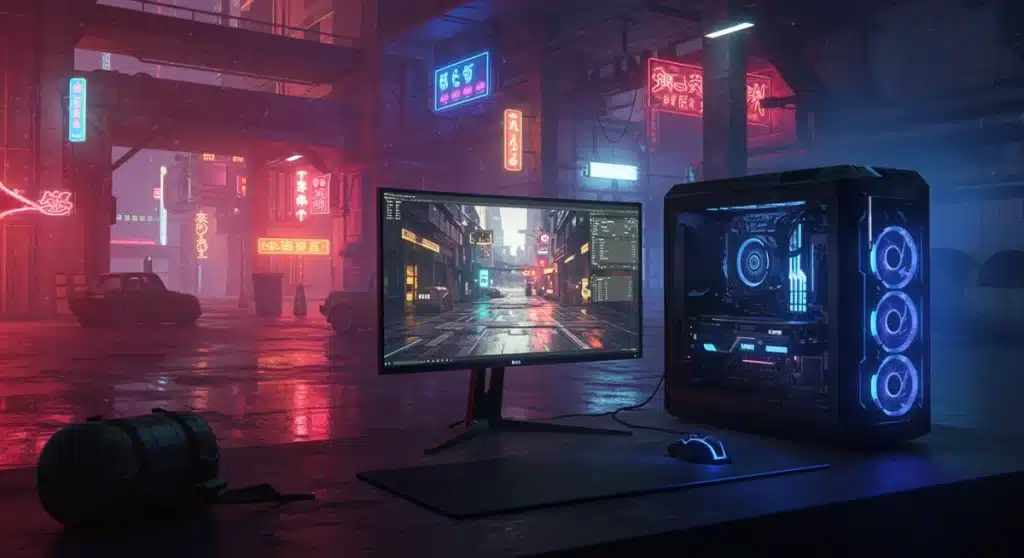
Ray Tracing 2.0 is poised to profoundly transform game visuals in titles released after June 2026, offering unprecedented levels of realistic lighting, reflections, and global illumination that will redefine player immersion and graphical fidelity in the gaming industry.
The gaming landscape is on the cusp of a revolutionary visual leap with the impending arrival of Ray Tracing 2.0, set to redefine how we perceive virtual worlds in games released after June 2026. This evolution promises to move beyond current graphical capabilities, delivering an unparalleled level of realism and immersion that will fundamentally alter player expectations.
Advertisements
The evolution of ray tracing technology
Ray tracing, in its foundational form, marked a significant departure from traditional rasterization methodologies by simulating the physical behavior of light. This initial iteration brought impressive improvements to reflections, shadows, and global illumination. However, its widespread adoption in games has been met with performance challenges and, at times, visual inconsistencies that left some players wanting more.
The journey from its theoretical conception to practical implementation has been a complex one, requiring substantial hardware advancements and sophisticated software optimization. Early implementations, while groundbreaking, often demanded significant computational power, leading to compromises in frame rates or resolution. This created a barrier for many gamers, limiting the full potential of ray tracing to high-end systems.
From concept to current implementation
Originally a technique used in film and architectural visualization for decades, ray tracing’s introduction to real-time gaming environments was a monumental undertaking. It involved adapting complex algorithms to run efficiently on consumer-grade GPUs. The initial goal was to bring cinematic-quality lighting to interactive experiences, moving away from pre-baked lighting solutions that often looked static and unnatural.
- Early ray tracing focused on direct light sources and basic reflections.
- Performance was a significant hurdle, often requiring dedicated RT cores.
- Developers experimented with hybrid rendering, combining rasterization with ray tracing.
The current generation of ray tracing has laid the groundwork, demonstrating the immense potential for realistic light interactions. It has shown us glimpses of what truly dynamic and physically accurate visuals can achieve, from the way light subtly bounces off surfaces to the intricate shadows cast by complex objects. This foundation is crucial for understanding the leap that Ray Tracing 2.0 aims to achieve, building on these experiences to overcome existing limitations and push the boundaries even further.
The evolution underscores a continuous drive towards visual fidelity, where the simulation of light is no longer an approximation but a core component of the rendering pipeline. This relentless pursuit of realism is what fuels innovations like Ray Tracing 2.0, promising a future where the lines between the virtual and the real become increasingly blurred.
Defining Ray Tracing 2.0: What’s new?
Ray Tracing 2.0 represents a significant leap forward from its predecessor, not merely an incremental update. This next generation of the technology promises to address many of the limitations found in current implementations, primarily focusing on improving fidelity, efficiency, and the scope of its application within game environments. It’s about more than just better reflections; it’s about a holistic approach to light simulation.
Key advancements include enhanced global illumination, more complex and accurate refractions, and a more sophisticated handling of volumetric effects. These improvements aim to create scenes where light behaves almost indistinguishably from reality, reacting to every surface and material with unprecedented precision. The goal is to eliminate the visual shortcuts that currently exist and provide a truly physically accurate representation of light.
Enhanced global illumination and indirect lighting
Perhaps the most impactful feature of Ray Tracing 2.0 is its advanced approach to global illumination. Current ray tracing often struggles with the subtle nuances of indirect light, which is crucial for realistic scenes. Ray Tracing 2.0 aims to simulate multiple light bounces more accurately, leading to:
- More natural ambient light in enclosed spaces.
- Color bleeding between objects, where the color of one surface subtly tints another.
- Realistic light diffusion through translucent materials.
This means environments will no longer rely on pre-baked light maps for indirect lighting, allowing for fully dynamic scenes that react instantly to changes in light sources or object placement. Imagine a sunset casting a warm glow that dynamically adjusts as clouds pass or as you move through a densely forested area; this level of interactivity is what Ray Tracing 2.0 promises.
Improved reflections, refractions, and volumetric effects
While current ray tracing offers impressive reflections, Ray Tracing 2.0 will elevate them further, providing greater detail and accuracy, especially for complex surfaces. Furthermore, refractions through transparent objects like glass or water will be significantly more realistic, bending light according to physical laws. Volumetric effects, such as fog, smoke, and god rays, will also see substantial enhancements, becoming more dense, natural, and interactive within the game world.
These combined advancements will create a visual tapestry where every element contributes to an overall sense of realism and depth. The distinction between real-time rendering and pre-rendered cinematic sequences will become increasingly blurred, setting a new standard for graphical excellence in gaming.
The hardware and software requirements for Ray Tracing 2.0
The advent of Ray Tracing 2.0 will inevitably bring about new demands on hardware and software ecosystems. While current GPUs with dedicated RT cores have paved the way, the increased complexity and fidelity promised by Ray Tracing 2.0 will necessitate even more powerful processing capabilities and sophisticated architectural designs. This means a new generation of graphics cards will be essential to fully leverage the technology.
Beyond raw power, optimization at the software level will be paramount. Game engines will need to be meticulously optimized to handle the heavier computational load, and developers will require new tools and pipelines to integrate these advanced lighting techniques efficiently. The synergy between hardware and software will be key to unlocking the full potential of Ray Tracing 2.0 without severely impacting performance.
Next-gen GPUs and dedicated RT cores
For Ray Tracing 2.0 to thrive, we can expect future GPUs to feature significantly more powerful and efficient dedicated RT cores. These cores are specifically designed to accelerate ray-triangle intersections and bounding volume hierarchy (BVH) traversals, the fundamental operations of ray tracing. Improvements will likely include:
- Increased number of RT cores for parallel processing.
- Enhancements to RT core architecture for faster calculations.
- Deeper integration with shader units for more flexible light interactions.
This dedicated hardware will be crucial in mitigating the performance overhead associated with tracing more complex light paths and handling a greater number of light bounces, ensuring that games can run at acceptable frame rates even with the most demanding visual settings enabled. The aim is to make Ray Tracing 2.0 accessible to a wider range of gaming systems, not just the absolute high-end.
Engine optimization and developer tools
Game engines like Unreal Engine and Unity will require substantial updates to fully support Ray Tracing 2.0. This includes new rendering pipelines, improved scene management for ray tracing data, and advanced optimization techniques such as denoising algorithms that are more robust and less prone to artifacts. Developers will also need access to intuitive tools that simplify the integration of these complex lighting models into their projects, reducing development time and complexity.
The collaboration between hardware manufacturers and software developers will be critical. Driver optimizations, API improvements, and standardized approaches will help ensure a smoother transition and enable developers to maximize the visual impact of Ray Tracing 2.0 across various platforms.
Impact on game development workflows and costs
The introduction of Ray Tracing 2.0 will undoubtedly have a profound impact on game development workflows and potentially increase production costs. While the visual benefits are clear, integrating such advanced lighting techniques requires significant adjustments to existing pipelines, from asset creation to level design and optimization. Developers will need to adapt to new methodologies to fully harness the power of this technology.
The demand for highly detailed and physically accurate assets will increase, as every surface and material will play a crucial role in how light interacts within a scene. This often means more time spent on texturing, material properties, and environmental storytelling. Furthermore, the expertise required to implement and optimize Ray Tracing 2.0 effectively may necessitate new hires or extensive training for existing teams.
Asset creation and material properties
With Ray Tracing 2.0, the importance of physically based rendering (PBR) materials will be amplified. Every texture, normal map, and roughness value will directly influence how light bounces, reflects, and refracts. This means:
- Higher resolution textures and more complex material graphs.
- Greater attention to detail in surface imperfections and micro-geometry.
- Rigorous testing of material interactions under various lighting conditions.
Artists will need to work with even greater precision, ensuring that the physical properties of virtual objects accurately mimic their real-world counterparts. This meticulous approach to asset creation will be fundamental to achieving the hyper-realistic visuals that Ray Tracing 2.0 promises.
Optimization and performance considerations
Optimizing games for Ray Tracing 2.0 will become a critical phase of development. Developers will need to employ advanced techniques to manage the computational load, including adaptive sampling, intelligent denoising, and dynamic resolution scaling. Balancing visual fidelity with playable frame rates will remain a core challenge, requiring innovative solutions to ensure a smooth and immersive experience for players across different hardware configurations.
The initial investment in tools, training, and talent might be substantial, but the long-term benefits in terms of visual quality and player immersion could justify these costs. As the technology matures and becomes more standardized, the development process is expected to become more streamlined, making advanced ray tracing accessible to a broader range of studios.
Expected visual enhancements in games after June 2026
The visual enhancements brought by Ray Tracing 2.0 in games released after June 2026 are expected to be transformative, setting a new benchmark for realism and immersion. Players can anticipate a level of graphical fidelity that blurs the lines between virtual and reality, leading to more believable and captivating game worlds. This isn’t just about ‘prettier’ graphics; it’s about a fundamental shift in how light, shadow, and reflection define the atmosphere and authenticity of a game.
Every scene, from a dimly lit dungeon to a sprawling open-world landscape, will benefit from physically accurate lighting that dynamically reacts to environmental changes. The subtle interplay of light and shadow will create a sense of depth and presence that current rendering techniques struggle to achieve, allowing for more impactful storytelling and environmental design.
Unprecedented realism in environments and characters
With Ray Tracing 2.0, environments will exhibit an authenticity never before seen in gaming. Light will interact seamlessly with every surface, from the worn texture of ancient stone to the intricate reflections on polished metal. This will result in:
- Hyper-realistic shadows that accurately soften or sharpen based on light source distance and object geometry.
- Dynamic reflections on all surfaces, not just specific ones, creating a cohesive visual experience.
- Natural atmospheric scattering and volumetric lighting that adds depth to outdoor scenes and enclosed spaces.
Character models will also benefit immensely. Skin will appear more lifelike with accurate subsurface scattering, eyes will gleam with realistic reflections, and clothing textures will react to light in a way that truly conveys their material properties. This level of detail will make interactions with NPCs and the player character feel more genuine and emotionally resonant.
Enhanced immersion and atmospheric depth
Beyond individual visual elements, Ray Tracing 2.0 will significantly enhance overall immersion. The consistent and physically accurate lighting will create a more believable world, drawing players deeper into the narrative and exploration. Atmospheric effects, driven by advanced volumetric rendering, will add unparalleled depth and mood. Imagine dense fog that accurately scatters light, or dust motes dancing in a sunbeam, reacting realistically to character movement.
This holistic approach to lighting will not only make games look better but also feel more tangible and responsive. The environment will become a more active participant in the gaming experience, reacting to the player’s presence and actions in nuanced ways, thereby enriching the sense of presence within the virtual world.
Challenges and future outlook for Ray Tracing 2.0
While the prospects for Ray Tracing 2.0 are incredibly exciting, its implementation and widespread adoption are not without challenges. The primary hurdles will revolve around optimizing performance across a diverse range of hardware, ensuring developer accessibility, and managing the increased complexity in game production. Overcoming these obstacles will be crucial for Ray Tracing 2.0 to truly become a ubiquitous standard in future gaming titles.
The future outlook, however, remains overwhelmingly positive. As hardware continues to evolve and software optimizations become more refined, the benefits of Ray Tracing 2.0 will become increasingly accessible. We can anticipate a future where this technology is not just a high-end feature but a fundamental component of how games are rendered, democratizing hyper-realistic visuals for a broader audience.
Performance optimization and accessibility
The biggest challenge for Ray Tracing 2.0 will be achieving optimal performance without demanding prohibitively expensive hardware. This requires continuous innovation in:
- More efficient ray tracing algorithms.
- Advanced denoising techniques that preserve detail while reducing computational cost.
- Intelligent upscaling technologies, like DLSS or FSR, specifically tailored for Ray Tracing 2.0 workloads.
Making the technology accessible means ensuring that players with mid-range hardware can still experience a significant portion of the visual enhancements without sacrificing playable frame rates. This will likely involve scalable implementations, allowing developers to fine-tune the level of ray tracing detail based on system capabilities.
The long-term vision for real-time light simulation
The long-term vision for real-time light simulation extends beyond just Ray Tracing 2.0. We can foresee a future where light simulation is so precise that it can accurately model complex phenomena like spectral dispersion, polarization, and even quantum light effects, further blurring the lines of reality. Future iterations might integrate real-time path tracing, where every light ray is simulated to its full extent, offering truly photorealistic rendering in interactive environments.
This continuous push towards physical accuracy will not only elevate visual fidelity but also potentially open up new avenues for gameplay mechanics that leverage light interaction, such as puzzles based on light manipulation or dynamic environments that react realistically to illumination changes. Ray Tracing 2.0 is a significant step on this ambitious journey, paving the way for truly immersive and visually stunning virtual worlds.
| Key Feature | Description |
|---|---|
| Enhanced Global Illumination | More accurate multi-bounce light, creating natural ambient lighting and color bleeding. |
| Improved Reflections & Refractions | Greater detail in reflections and physically accurate light bending through transparent objects. |
| Advanced Volumetric Effects | More realistic fog, smoke, and light rays that interact dynamically with the environment. |
| Hardware & Software Demands | Requires next-gen GPUs with powerful RT cores and significant engine optimizations. |
Frequently asked questions about Ray Tracing 2.0
Ray Tracing 2.0 significantly enhances global illumination, indirect lighting, and volumetric effects compared to its predecessor. It aims for more physically accurate light bounces, complex refractions, and denser atmospheric effects, moving beyond basic reflections and shadows to create a more cohesive and realistic lighting model across entire scenes.
It is highly likely that games leveraging Ray Tracing 2.0 after June 2026 will require next-generation GPUs with more advanced and efficient dedicated RT cores. While current ray tracing cards might offer some compatibility, they may not deliver the full visual fidelity or performance intended by Ray Tracing 2.0 without significant compromises.
Ray Tracing 2.0 will likely increase game development costs and timelines due to the need for higher-fidelity assets, more complex material properties, and extensive optimization. Developers will require updated tools, engine enhancements, and potentially specialized talent to fully integrate and optimize these advanced lighting techniques effectively.
Players can anticipate unprecedented realism in environments and characters, with hyper-realistic shadows, dynamic reflections on all surfaces, and natural atmospheric scattering. This will lead to enhanced immersion, where light and shadow contribute significantly to the game’s atmosphere and overall visual depth, blurring the lines of virtual reality.
Ray Tracing 2.0 is a significant advancement but not the final step. The long-term vision for real-time light simulation includes even more precise modeling of complex light phenomena, potentially leading to real-time path tracing for truly photorealistic rendering. It’s a continuous journey towards achieving ultimate visual fidelity and immersion in interactive experiences.
Conclusion
The arrival of Ray Tracing 2.0 in games released after June 2026 marks a pivotal moment in the evolution of interactive visuals. It promises to transcend the current limitations of real-time rendering, delivering an unprecedented level of realism, immersion, and atmospheric depth. While challenges related to hardware demands and development workflows will persist, the advancements in global illumination, reflections, and volumetric effects are set to redefine player expectations and establish a new benchmark for graphical excellence in the gaming industry. The future of gaming visuals is brighter and more realistic than ever before, inviting players into worlds that are virtually indistinguishable from reality.