Liquid vs. Air Cooling: 2026 CPU Performance for 250W+ TDP
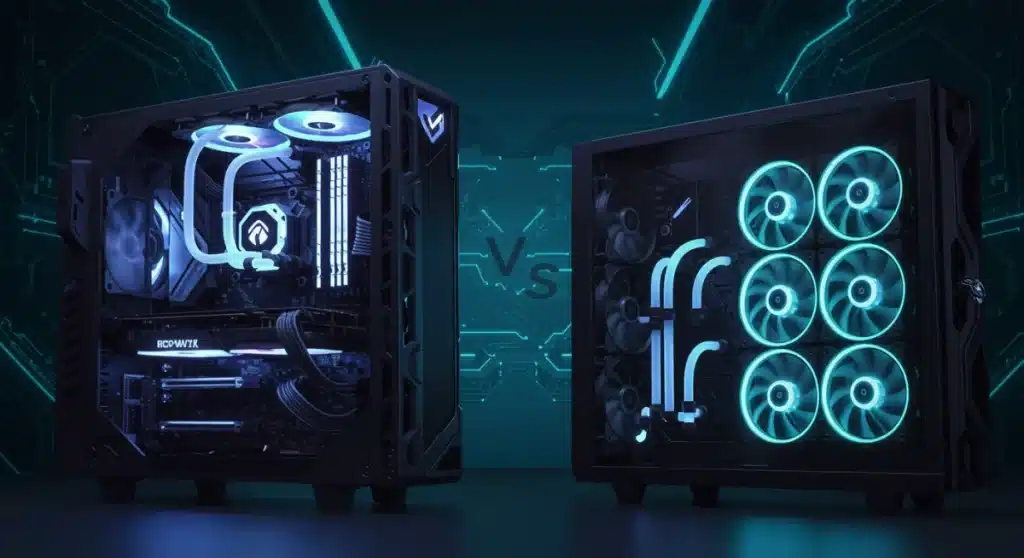
For CPUs with 250W+ TDP in 2026, liquid cooling generally offers superior thermal dissipation and quieter operation compared to air cooling, albeit at a higher initial cost and with more complex installation.
As processor technology advances, so does the demand for efficient thermal management. For enthusiasts and professionals running high-end CPUs with thermal design power (TDP) exceeding 250W, the question of liquid cooling vs. air cooling: a 2026 performance comparison for CPUs with 250W+ TDP becomes more critical than ever. This article will dissect the nuanced differences and help you decide which cooling solution is best for your demanding system.
Advertisements
The evolution of CPU cooling: a 2026 perspective
The landscape of CPU cooling has undergone significant transformations, driven by the relentless pursuit of higher clock speeds and core counts in modern processors. In 2026, with CPUs regularly pushing past the 250W TDP mark, the efficacy of cooling solutions directly impacts performance and system stability.
Early cooling methods were rudimentary, often relying on simple heatsinks. However, as power consumption escalated, so did the need for more sophisticated designs. Today, we stand at a crossroads where both air and liquid cooling have matured into highly capable, yet distinctly different, technologies.
Air cooling innovations
Air cooling, often seen as the traditional choice, has not stood still. Manufacturers have introduced several innovations to enhance its performance for high-TDP processors.
- Advanced fin designs: Heatsinks now feature intricate fin arrays, maximizing surface area for heat dissipation.
- Improved heat pipe technology: Vapor chamber and direct-contact heat pipes are more efficient at transferring heat away from the CPU IHS.
- High static pressure fans: Fans are designed to push air through dense fin stacks more effectively, overcoming resistance.
- Larger form factors: Premium air coolers have grown in size, accommodating more heatsink mass and larger fans.
These advancements ensure that top-tier air coolers can still contend with moderately high TDPs, offering a robust and reliable solution for many users. However, the physical limitations of air as a heat transfer medium eventually become apparent.
The ongoing development in air cooling focuses on refining these existing principles, pushing the boundaries of what passive and active air-based systems can achieve. Materials science also plays a role, with new alloys and coatings improving thermal conductivity and resistance to corrosion, extending the lifespan and efficiency of these components.
Liquid cooling breakthroughs: beyond the enthusiast niche
Liquid cooling, once the domain of extreme overclockers, has become increasingly accessible and refined. For CPUs with 250W+ TDP, liquid cooling offers a compelling alternative, often providing superior thermal performance.
The fundamental principle of liquid cooling involves circulating a coolant, typically water-based, over the CPU to absorb heat, which is then transported to a radiator and dissipated into the ambient air by fans. This method leverages the higher thermal conductivity and heat capacity of liquid compared to air.
All-in-one (AIO) liquid coolers
AIO liquid coolers have democratized liquid cooling, offering a sealed, pre-filled, and relatively easy-to-install solution. In 2026, AIOs have seen significant improvements.
- Larger radiator sizes: 360mm and even 420mm radiators are common, providing ample surface area for heat exchange.
- More efficient pump designs: Quieter and more powerful pumps ensure optimal coolant flow.
- Advanced cold plate designs: Micro-fin arrays and improved materials enhance heat transfer from the CPU.
- Integrated smart controls: Many AIOs now feature software integration for fan and pump speed control, as well as RGB lighting customization.
These developments make AIOs a go-to choice for high-performance systems where traditional air cooling might struggle to maintain optimal temperatures under heavy loads. The aesthetic appeal of AIOs, with their clean tubing and often customizable lighting, also contributes to their popularity.
Beyond AIOs, custom liquid cooling loops offer the ultimate in thermal performance and aesthetic customization. While more complex and costly, they allow for cooling multiple components (CPU, GPU, RAM) within a single loop, providing unparalleled efficiency and silent operation.
Thermal performance comparison: 250W+ TDP scenarios
When dealing with CPUs that generate 250W+ of heat, the difference in thermal performance between liquid and air cooling becomes stark. This is where the inherent advantages of liquid as a heat transfer medium truly shine.
Air coolers, even the largest and most efficient ones, face a fundamental limitation: the thermal capacity of air is significantly lower than that of liquid. This means air coolers need to move a much larger volume of air to dissipate the same amount of heat, often leading to higher fan speeds and increased noise.
Stress testing results in 2026
Benchmarks from 2026 reveal a consistent trend: under sustained high loads, liquid coolers consistently outperform air coolers for CPUs exceeding 250W TDP. While a premium air cooler might keep a 250W CPU within safe operating temperatures, a high-end AIO or custom loop will typically achieve lower temperatures, often by 5-10 degrees Celsius or more.
This temperature delta translates directly into better boost clock sustainability and reduced thermal throttling, crucial for maintaining peak performance during intense gaming sessions or demanding professional applications like video rendering and scientific simulations. The ability to maintain lower temperatures also contributes to the overall longevity of the CPU.
The thermal headroom provided by liquid cooling also gives users more flexibility for overclocking. With more efficient heat dissipation, enthusiasts can push their CPUs further without worrying about overheating, unlocking additional performance potential that might be inaccessible with air cooling.
Noise levels and acoustics: a quiet revolution
Beyond raw thermal performance, the acoustic profile of a cooling solution is a critical factor for many users, especially those who value a quiet computing experience. Here, liquid cooling often holds an advantage, particularly with high-TDP CPUs.
Air coolers, to manage 250W+ TDP, typically require large heatsinks and powerful fans. While modern fans are quieter than their predecessors, the sheer amount of airflow needed can still generate noticeable noise, especially under load. This is often characterized by a whooshing sound as air is pushed through dense fin arrays.
Liquid cooling’s acoustic edge
Liquid coolers, by their nature, can be designed for quieter operation. The coolant absorbs heat efficiently, allowing for larger radiators and slower fan speeds to dissipate the same amount of heat. This often results in a lower overall noise output.
- Lower fan RPMs: Radiator fans can run at lower speeds due to liquid’s superior heat transfer.
- Pump noise reduction: Modern pump designs are increasingly optimized for quiet operation, with many being virtually inaudible.
- Distributed heat dissipation: Heat is moved away from the CPU to a radiator, which can be placed in a less acoustically sensitive part of the case.
While a cheap AIO might still exhibit pump whine or fan noise, high-quality liquid cooling systems, especially custom loops, can achieve near-silent operation even under heavy loads. This makes them ideal for environments where noise is a concern, such as recording studios or quiet office setups.
The perceived noise level is also subjective. Some users might find the hum of a pump less irritating than the whir of multiple high-speed fans. The trend in 2026 is towards increasingly sophisticated fan and pump control mechanisms that dynamically adjust speeds to balance thermal performance and acoustics, offering users more control over their system’s sound profile.
Installation, maintenance, and reliability considerations
The practicalities of installing and maintaining a cooling system are significant factors in the decision-making process. While liquid cooling offers performance benefits, it often comes with a different set of considerations compared to air cooling.
Air coolers are generally simpler to install. They typically involve mounting a heatsink and fan assembly directly to the CPU socket. Maintenance is usually limited to dusting the heatsink fins and fans periodically. Their mechanical simplicity also contributes to a perception of higher long-term reliability, with fewer potential points of failure.
Liquid cooling complexities
Liquid cooling, especially custom loops, introduces more complexity. AIOs simplify this somewhat, but still require careful radiator and fan placement within the case. Custom loops demand a higher level of technical expertise for assembly, leak testing, and coolant management.
- Installation difficulty: AIOs are moderately easy, custom loops are significantly harder.
- Maintenance requirements: AIOs are largely maintenance-free, but custom loops require periodic coolant changes and component inspection.
- Potential for leaks: While rare with modern components, a leak in a liquid cooling system can be catastrophic for other hardware.
- Pump lifespan: Pumps are mechanical components with a finite lifespan, though modern pumps are designed for many years of operation.
Despite these considerations, the reliability of liquid cooling systems has improved dramatically. AIOs are now highly robust, and custom loop components are designed with durability and safety in mind. Many manufacturers offer extended warranties, reflecting their confidence in the products.
For users prioritizing ease of use and maximum reliability over bleeding-edge thermal performance, a high-end air cooler remains a strong contender. However, for those willing to invest time and effort into installation and maintenance, liquid cooling offers unparalleled performance and a unique aesthetic.
Cost analysis and value proposition for 2026
The financial investment required for CPU cooling solutions varies widely, and this is a crucial factor for many consumers. For CPUs with 250W+ TDP, both air and liquid cooling options exist across different price points, but their value propositions differ.
High-performance air coolers typically range from $70 to $120. At this price, you get a robust, reliable, and generally quiet solution that can handle substantial heat loads. Their value lies in their effectiveness, simplicity, and longevity without breaking the bank.
Liquid cooling price tiers
Liquid cooling solutions start at a higher price point. Entry-level AIOs might begin around $90-$100, but for effective cooling of 250W+ TDP CPUs, you’re looking at premium 280mm or 360mm AIOs, which can cost anywhere from $150 to $250.
- Entry-level AIOs: Offer basic liquid cooling benefits, suitable for moderate TDPs.
- Premium AIOs: Designed for high-TDP CPUs, featuring larger radiators, better pumps, and advanced fans.
- Custom liquid loops: Represent the highest investment, often ranging from $300 to $600+ for components alone, not including installation time.
The value proposition for liquid cooling, especially custom loops, extends beyond raw performance. It includes aesthetic appeal, the ability to cool multiple components, and the potential for a quieter system. For enthusiasts who view their PC as a showpiece, the investment in a custom loop can be justified by the visual impact and personalization.
In 2026, the market offers a wide spectrum of choices. The decision ultimately comes down to balancing budget, desired performance, noise levels, and willingness to engage with more complex installation and maintenance. For the average user with a 250W+ CPU, a high-end AIO often presents the best balance of performance, ease of use, and cost.
| Feature | Description for 250W+ TDP CPUs |
|---|---|
| Thermal Performance | Liquid cooling generally offers superior heat dissipation, resulting in lower temperatures and better boost clock stability for 250W+ TDP CPUs. |
| Noise Levels | Liquid cooling often achieves quieter operation due to more efficient heat transfer allowing for lower fan speeds compared to high-end air coolers. |
| Cost & Complexity | Air cooling is typically more affordable and simpler to install/maintain. Liquid cooling, especially custom loops, involves higher costs and increased complexity. |
| Reliability | Air coolers are mechanically simpler, often perceived as more reliable long-term. Modern AIOs are highly reliable, though custom loops introduce more potential failure points. |
Frequently asked questions about CPU cooling
While not strictly necessary for all 250W+ TDP CPUs, liquid cooling is highly recommended for optimal performance. It provides superior thermal headroom, allowing these powerful processors to maintain higher boost clocks and prevent thermal throttling, especially under sustained heavy loads like gaming or content creation.
Yes, premium air coolers remain viable for many high-end systems in 2026. While they might not match the absolute thermal performance of liquid cooling for 250W+ TDPs, they offer excellent reliability, easier installation, and lower cost. For users prioritizing simplicity and proven dependability, a top-tier air cooler is still a strong option.
The primary advantage for gaming is the ability to maintain lower CPU temperatures, which directly translates to sustained higher boost frequencies. This prevents performance dips during intense gaming sessions and allows modern CPUs to deliver their maximum potential without thermal throttling, resulting in smoother gameplay.
All-in-one (AIO) liquid coolers require minimal maintenance, typically just dusting the radiator. Custom liquid loops, however, demand more attention, including periodic coolant changes (every 1-2 years) and inspection for leaks or blockages. The complexity varies significantly between these two liquid cooling types.
Air cooling is generally more cost-effective, with high-performance air coolers being significantly cheaper than comparable liquid cooling solutions, especially custom loops. While AIOs have become more affordable, the initial investment for liquid cooling still tends to be higher. Consider your budget and long-term performance needs.
Conclusion
In 2026, the choice between liquid cooling and air cooling for CPUs with 250W+ TDP is more nuanced than a simple ‘better or worse’ argument. For enthusiasts and professionals demanding the absolute best in thermal performance, sustained boost clocks, and a quieter operating environment, liquid cooling, particularly high-end AIOs or custom loops, offers a compelling advantage. However, advancements in air cooling mean that top-tier air coolers still provide a robust, reliable, and cost-effective solution for many high-performance systems. Your decision should ultimately hinge on a balance of budget, desired performance metrics, noise tolerance, and willingness to engage with the installation and maintenance complexities of each system.