RAM in 2026: DDR5-6000MHz Standard for Gaming Performance?
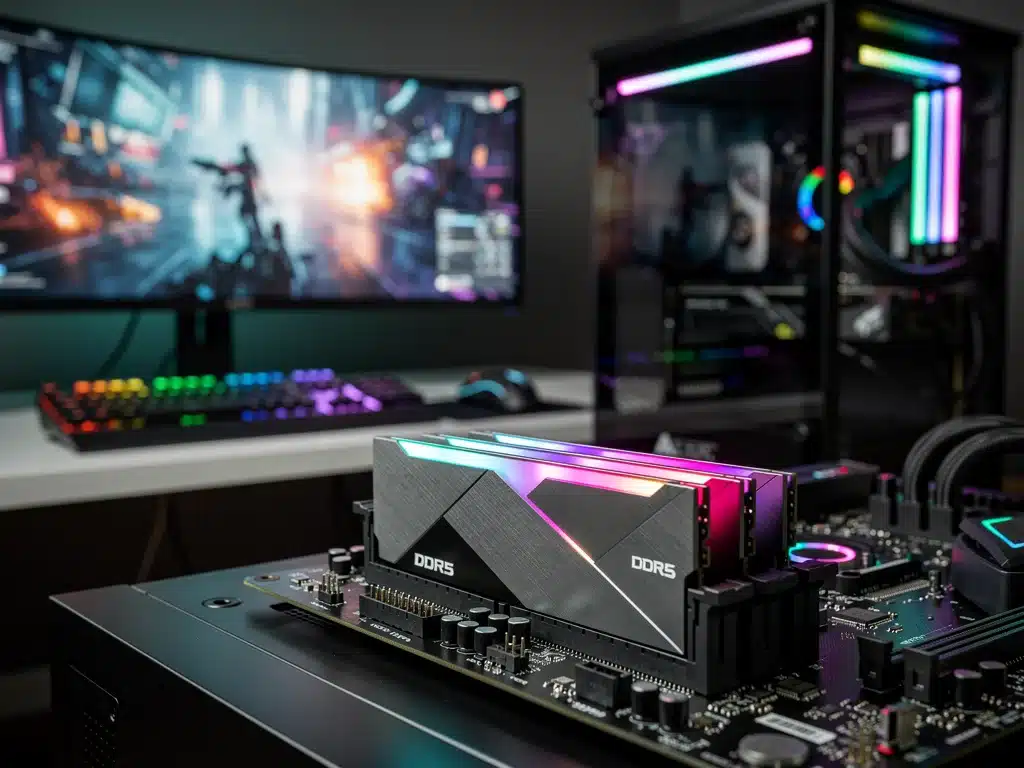
DDR5-6000MHz is emerging as a widely discussed gaming memory target for 2026, particularly among PC builders seeking a balance between speed, stability, and cost. Its position as a possible mainstream benchmark will depend on platform support and measurable performance gains.
Newer processors, optimized memory controllers, and more demanding games are increasing interest in faster DDR5 configurations. However, real-world improvements can vary according to CPU architecture, latency, graphics settings, and whether a game is limited by memory performance.
Consumers should monitor motherboard compatibility, memory prices, BIOS updates, and benchmark results across current gaming platforms. DDR5-6000MHz may become a common recommendation, but its value will continue to depend on the complete system rather than frequency alone.
The Evolution of RAM: From DDR4 to DDR5-6000MHz
The transition from DDR4 to DDR5 RAM has been a significant milestone in memory technology, promising higher bandwidth and improved power efficiency. This evolution directly impacts gaming, where memory speed and capacity are crucial for smooth gameplay and reduced loading times. The industry has been steadily moving towards faster clock speeds and lower latencies.
Advertisements
DDR5 modules, initially launched with speeds around 4800MHz, have rapidly progressed, with 6000MHz modules becoming increasingly common. This acceleration is driven by advancements in manufacturing processes and the growing demands of modern applications, especially high-fidelity gaming. Understanding this progression is key to predicting future standards.
The market’s adoption rate and the development of supporting platforms like new motherboards and CPUs play a vital role in establishing a new standard. Currently, DDR5 is still in its early to mid-lifecycle, with further optimizations and speed increases expected. This continuous development makes the DDR5-6000MHz Gaming Standard a strong contender for the default in the near future.
Technological Leaps and Performance Gains
DDR5 brings several architectural improvements over its predecessor, DDR4, including a higher burst length, two independent 32-bit channels per DIMM, and integrated power management.
These enhancements contribute to a substantial increase in bandwidth and overall system responsiveness. For gamers, this translates into tangible benefits.
The increased bandwidth of DDR5-6000MHz allows for faster data transfer between the CPU, GPU, and memory, reducing bottlenecks in demanding games.
This is particularly noticeable in open-world titles, games with complex AI, and those utilizing high-resolution textures. The result is a more fluid and immersive gaming experience, with fewer stutters and quicker scene rendering.
- Higher bandwidth for faster data processing.
- Improved power efficiency for cooler operation.
- Dual 32-bit channels per module for better utilization.
- Integrated power management on the DIMM itself.
These technical advancements not only improve immediate performance but also lay the groundwork for future gaming innovations.
As game developers continue to push graphical boundaries, the underlying hardware, especially RAM, must keep pace. The DDR5-6000MHz Gaming Standard addresses these evolving requirements head-on.
Current Market Adoption and Price Trends for DDR5
The adoption of DDR5 has been a gradual process, primarily influenced by initial higher costs and the requirement for new motherboard chipsets and compatible CPUs.
However, as production scales and technology matures, prices have steadily declined, making DDR5 more accessible to a broader consumer base. This trend is crucial for establishing any new technology as a standard.
Major hardware manufacturers, including Intel and AMD, have released platforms that natively support DDR5, further accelerating its market penetration.
The availability of a wide range of DDR5 modules from various brands, including those at 6000MHz, signifies a maturing ecosystem. This competitive landscape drives both innovation and affordability, benefiting consumers.
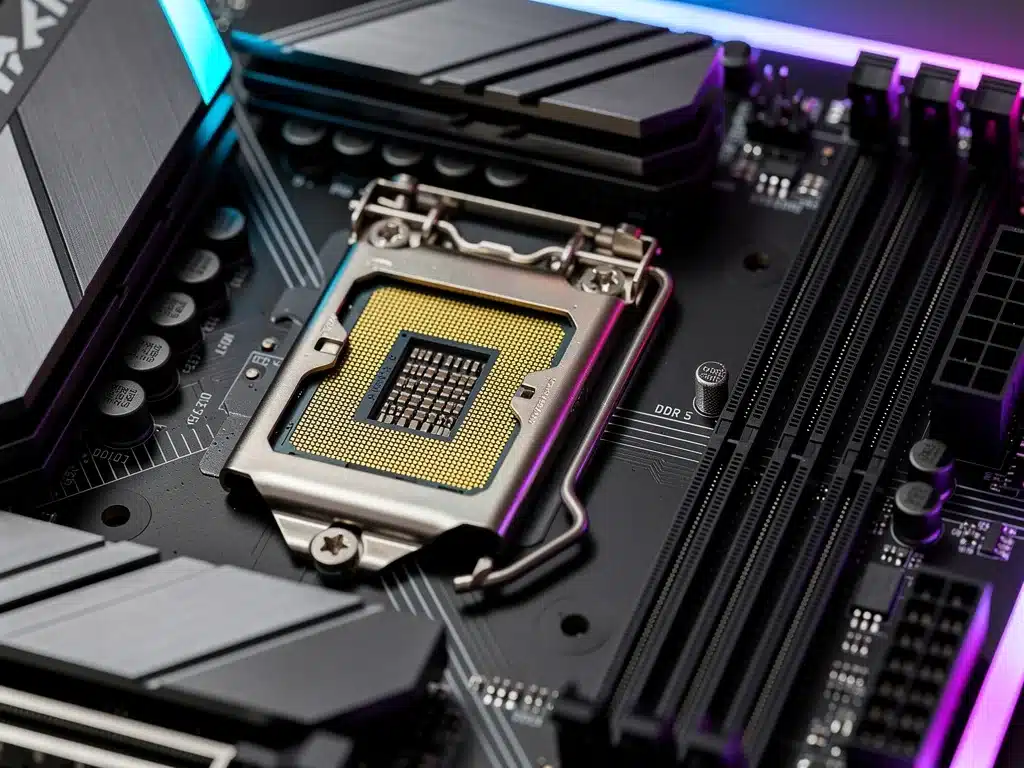
The pricing of DDR5-6000MHz modules, while still higher than equivalent DDR4, is becoming more competitive, especially when considering the performance uplift.
This cost-to-performance ratio is a key factor for gamers looking to upgrade or build new systems. By 2026, it is anticipated that the price premium for DDR5-6000MHz Gaming Standard will be significantly reduced, making it a default choice for mid-range to high-end gaming rigs.
Challenges in Widespread Adoption
Despite the clear advantages, several challenges persist in the widespread adoption of DDR5, particularly at the 6000MHz speed.
One primary hurdle has been motherboard and CPU compatibility, requiring users to invest in entirely new platforms. This can be a significant barrier for those on tighter budgets or those who have recently upgraded their DDR4 systems.
Initial supply chain issues and manufacturing complexities also contributed to higher prices and limited availability, though these have largely been mitigated.
Another consideration is the actual performance gain in real-world gaming scenarios. While benchmarks often show impressive numbers, the perceived difference in everyday gaming might not always justify the cost for every user, especially at lower resolutions or refresh rates.
- Platform upgrade requirement (CPU and motherboard).
- Initial higher cost compared to DDR4.
- Supply chain and manufacturing complexities.
- Perceived vs. actual in-game performance benefits.
However, as game engines become more optimized for DDR5 and as the technology continues to mature, these challenges are expected to diminish.
The increasing demand for high refresh rate 4K gaming and VR experiences will naturally push the industry towards faster memory solutions like the DDR5-6000MHz Gaming Standard.
Performance Benchmarks: DDR5-6000MHz in Action
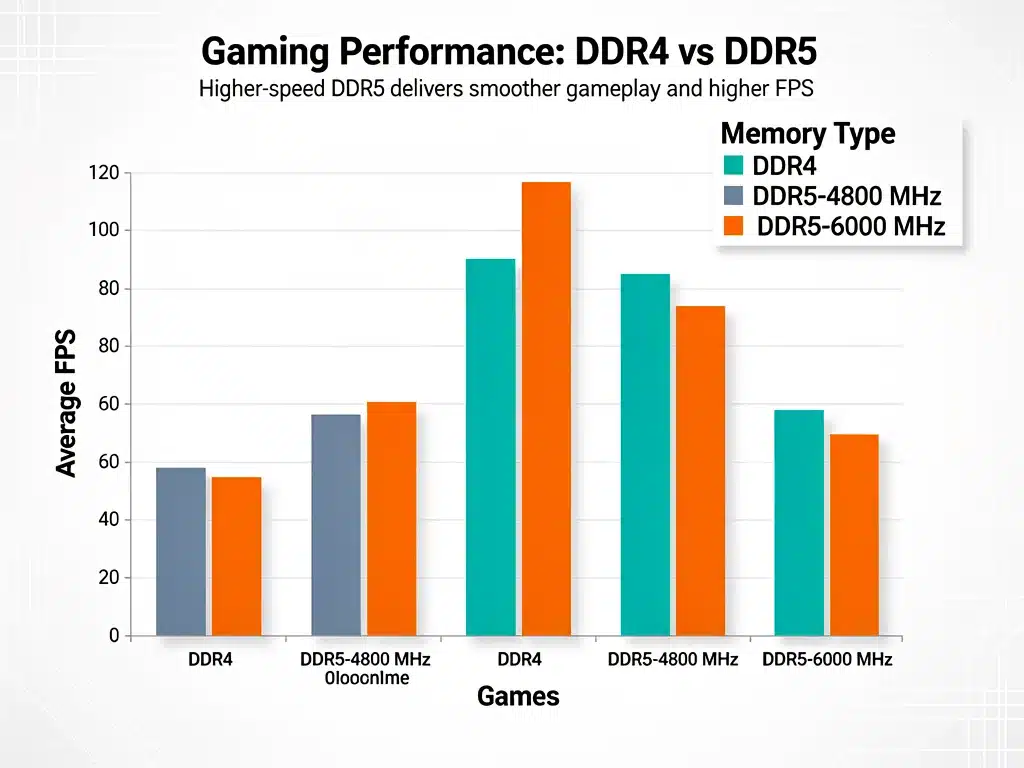
Numerous independent tests and benchmarks have consistently demonstrated the superior performance of DDR5-6000MHz over slower DDR5 modules and its DDR4 predecessors, especially in CPU-intensive games.
These benchmarks often reveal significant improvements in minimum frame rates, which are crucial for a smooth and consistent gaming experience, particularly during intense action sequences.
In titles like Cyberpunk 2077, Assassin’s Creed Valhalla, and Microsoft Flight Simulator, DDR5-6000MHz has shown measurable gains in average FPS and, more importantly, a reduction in 1% and 0.1% low FPS.
This means fewer stutters and a more consistent frame delivery, which directly translates to a better gaming experience. The impact is more pronounced when paired with high-end CPUs and GPUs that can fully utilize the increased memory bandwidth.
These performance uplifts are not just theoretical; they are consistently replicated across various testing methodologies and hardware configurations.
As games continue to demand more from system memory, the advantages of the DDR5-6000MHz Gaming Standard become increasingly apparent, solidifying its position as a performance leader. Gamers seeking the absolute best performance will find this speed highly beneficial.
Real-World Gaming Scenarios
Beyond synthetic benchmarks, the real-world impact of DDR5-6000MHz in gaming is observable in various scenarios.
Loading times for large game worlds and assets are noticeably reduced, improving the overall flow of gameplay. This is particularly relevant for games that frequently load new areas or stream large amounts of data from storage.
Furthermore, in competitive multiplayer games where every millisecond counts, the lower latency and higher throughput of DDR5-6000MHz can provide a subtle yet critical advantage.
The system can process game logic and render frames more quickly, leading to a more responsive input and potentially better reaction times. This marginal gain can be decisive in esports titles.
- Reduced game loading times.
- Smoother frame delivery in demanding titles.
- Improved responsiveness in competitive gaming.
- Better handling of high-resolution textures and assets.
Content creators who also game will find the benefits extend beyond gaming, as faster RAM aids in video editing, 3D rendering, and other memory-intensive tasks.
This versatility makes the DDR5-6000MHz Gaming Standard an attractive option for a broader demographic than just dedicated gamers.
Compatibility with Future Gaming Hardware in 2026
Looking ahead to 2026, compatibility with upcoming CPU architectures and GPU generations is paramount for any memory standard.
Both Intel and AMD are committed to DDR5 for their future processor lines, ensuring long-term support and optimization. This commitment from major chip manufacturers is a strong indicator of DDR5’s staying power.
New motherboards will continue to be designed with DDR5 in mind, offering improved power delivery and signal integrity to support even higher speeds and capacities.
This forward-looking design ensures that investing in DDR5-6000MHz now will provide a viable upgrade path and compatibility with next-generation components. The ecosystem is being built around DDR5.
GPU manufacturers are also designing their next-generation graphics cards to leverage the increased bandwidth and efficiency that DDR5 platforms offer.
The synergy between faster CPUs, GPUs, and memory will unlock new levels of graphical fidelity and computational power for gaming.
Therefore, the DDR5-6000MHz Gaming Standard is not just about current performance but also about future-proofing gaming systems.
Anticipated CPU and GPU Synergies
The synergy between high-speed DDR5 RAM and next-generation CPUs and GPUs is expected to be a game-changer for gaming performance.
Modern processors, especially those with many cores and threads, can fully exploit the increased memory bandwidth of DDR5 to feed data more efficiently, preventing performance bottlenecks. This is crucial for maintaining high frame rates in complex scenes.
Similarly, advanced GPUs are becoming increasingly memory-bandwidth hungry, especially with the push towards higher resolutions and ray tracing.
DDR5-6000MHz helps ensure that the GPU has rapid access to textures, shaders, and other game assets, leading to smoother rendering and less latency. The entire system benefits from this balanced approach to hardware design.
- Enhanced data throughput for multi-core CPUs.
- Improved asset streaming for next-gen GPUs.
- Reduced overall system latency.
- Optimized performance for ray tracing and high resolutions.
This holistic approach to hardware design, where memory, CPU, and GPU work in concert, will define the gaming experience of 2026.
The DDR5-6000MHz Gaming Standard is poised to be a pivotal component in this ecosystem, enabling developers to create even more immersive and graphically stunning worlds without compromising performance.
Overclocking Potential and Stability of DDR5-6000MHz
While 6000MHz is already a high speed for DDR5, many modules offer significant overclocking headroom, allowing enthusiasts to push performance even further.
Manufacturers are designing their modules with higher quality components and robust power delivery systems to facilitate stable overclocking. This potential for enhanced performance appeals to a segment of the gaming community.
However, successful overclocking requires compatible motherboards with strong VRMs, capable CPUs, and adequate cooling solutions to maintain stability.
The stability of DDR5-6000MHz at its stock speeds is generally excellent, but pushing beyond that necessitates careful tuning and testing. This balance between performance and stability is a key consideration for users.
As the technology matures, it is expected that even higher speeds will become standard, and the overclocking potential of current 6000MHz modules will continue to be explored.
The resilience and adaptability of the DDR5-6000MHz Gaming Standard highlight its robust design, making it a reliable choice for both out-of-the-box performance and enthusiast tweaking.
Factors Influencing Overclocking Success
Several factors determine the success and stability of overclocking DDR5-6000MHz RAM. The quality of the memory integrated circuits (ICs) is paramount, with certain manufacturers and batches known for better overclocking capabilities.
The motherboard’s PCB design and BIOS optimization also play a crucial role in supporting higher frequencies and tighter timings.
Furthermore, the CPU’s integrated memory controller (IMC) is a significant variable, as some processors handle higher memory speeds more efficiently than others.
Effective cooling of both the RAM modules and the surrounding motherboard components is also essential to prevent thermal throttling and ensure long-term stability. Overclocking is a nuanced process that requires attention to detail.
- Quality of memory ICs (e.g., Hynix A-die, Samsung B-die).
- Motherboard PCB design and BIOS optimization.
- CPU’s integrated memory controller capabilities.
- Adequate cooling for RAM and motherboard.
For those willing to delve into the complexities of memory tuning, the DDR5-6000MHz Gaming Standard offers a rewarding experience, potentially unlocking even greater performance gains.
However, for most users, the out-of-the-box performance at 6000MHz will be more than sufficient to meet their gaming needs in 2026.
The Role of Software Optimization in DDR5 Performance
Hardware advancements are only one part of the performance equation; software optimization plays an equally critical role in fully leveraging DDR5-6000MHz.
Game developers and operating system designers are continuously working to optimize their code to take advantage of faster memory speeds and new memory architectures. This ongoing optimization ensures that the benefits of DDR5 are fully realized.
Modern game engines are being updated to better utilize the increased bandwidth and lower latency of DDR5, leading to more efficient asset loading, improved scene rendering, and overall smoother performance.
Operating systems like Windows are also being refined to manage memory more effectively, reducing overhead and maximizing available resources for gaming. This collaborative effort across hardware and software is essential.
The combination of advanced hardware like the DDR5-6000MHz Gaming Standard and sophisticated software optimization creates a powerful synergy that elevates the entire gaming experience.
Without proper software support, even the fastest hardware cannot perform at its full potential, emphasizing the importance of this ongoing development.
Game Engine and OS Enhancements
Game engines such as Unreal Engine 5 and Unity are at the forefront of optimizing for DDR5. These engines are designed to handle large datasets and complex physics simulations, directly benefiting from the increased memory bandwidth.
Developers are implementing techniques that reduce memory access latency and improve data streaming, making games more responsive and visually stunning.
Operating system updates often include memory management improvements that can impact gaming performance.
These enhancements ensure that game processes are prioritized and that memory is allocated efficiently, preventing fragmentation and maximizing throughput. The continuous evolution of both game engines and operating systems ensures that DDR5 remains relevant and effective.
- Unreal Engine 5 and Unity optimizations for DDR5.
- Improved memory management in operating systems.
- Efficient data streaming and asset loading.
- Reduced memory access latency for game processes.
As we approach 2026, these software optimizations will only become more sophisticated, further solidifying the position of the DDR5-6000MHz Gaming Standard.
The continuous interplay between hardware innovation and software refinement is what drives the progress of the gaming industry, delivering increasingly immersive and high-performance experiences to players.
Future Outlook: Beyond DDR5-6000MHz in 2026
While DDR5-6000MHz Gaming Standard appears set to become the standard for gaming performance in 2026, the evolution of RAM technology does not stop there.
The industry is already looking towards even faster DDR5 modules, with speeds of 7200MHz, 8000MHz, and beyond already being developed and tested. This relentless pursuit of speed will continue to push performance boundaries.
Beyond speed, future advancements will likely focus on increased capacity per module, lower power consumption, and potentially new memory technologies that offer even greater efficiency.
The demand for memory will only grow as applications become more complex and data-intensive. This continuous innovation ensures that gamers will always have access to cutting-edge hardware.
The long-term roadmap for RAM technology includes DDR6, which is still several years away but promises another leap in performance. However, for the immediate future, DDR5, particularly at the 6000MHz mark, will be the dominant force. Understanding this trajectory helps in making informed decisions about hardware investments for the coming years.
Emerging Memory Technologies and DDR6
While DDR5-6000MHz is the focus for 2026, the broader memory landscape is constantly evolving. Research into emerging memory technologies like HBM (High Bandwidth Memory) and CXL (Compute Express Link) continues, though these are currently more prevalent in specialized computing environments.
These technologies offer different approaches to memory architecture, primarily focusing on extreme bandwidth or improved cache coherency.
DDR6 is on the horizon, with preliminary discussions and research already underway. It is expected to bring another significant increase in bandwidth and efficiency, potentially doubling the speeds seen in early DDR5.
However, the commercial availability and widespread adoption of DDR6 are likely several years beyond 2026, making DDR5 the primary focus for gaming in the near term.
- Development of HBM and CXL for specialized applications.
- Preliminary research and discussions for DDR6.
- Expected significant bandwidth and efficiency gains with DDR6.
- DDR6 widespread adoption likely beyond 2026.
Therefore, while these future technologies represent exciting prospects, the DDR5-6000MHz Gaming Standard remains the most relevant and impactful development for mainstream gaming performance in the immediate future. The industry’s focus will be on refining and optimizing DDR5 before the next major generational leap.
| Key Point | Brief Description |
|---|---|
| Performance Standard | DDR5-6000MHz is poised to become the default for high-performance gaming in 2026. |
| Market Adoption | Decreasing prices and broad platform support are driving widespread adoption. |
| Gaming Impact | Significant gains in minimum FPS, reduced loading times, and improved responsiveness. |
| Future Compatibility | Strong synergy with upcoming CPU and GPU generations, ensuring longevity. |
Frequently Asked Questions About DDR5-6000MHz Gaming Standard
While DDR5-6000MHz will likely be the standard for high-performance and enthusiast gaming, casual gamers or those playing less demanding titles might still find slower DDR5 or even optimized DDR4 sufficient. However, for experiencing new AAA titles at their best, it will be highly recommended.
Upgrading currently requires a new motherboard and CPU, making it a significant investment. For those building a new high-end system, it’s a strong consideration. For existing DDR4 users, waiting for further price drops and broader platform integration might be more economical, though performance benefits are clear.
DDR5-6000MHz offers significantly higher bandwidth, improved power efficiency, and architectural enhancements like dual 32-bit channels per DIMM. These lead to better frame rates, reduced loading times, and overall smoother system responsiveness compared to DDR4 in demanding applications.
Yes, both Intel and AMD are committed to DDR5 for their upcoming processor generations, ensuring long-term compatibility. New motherboards are also designed to support and optimize DDR5, making it a future-proof investment for gaming systems in the coming years.
Software optimization is crucial; game engines and operating systems are continually updated to leverage DDR5’s capabilities. These optimizations ensure efficient data handling, faster asset loading, and better overall system utilization, maximizing the performance gains offered by DDR5-6000MHz RAM.
Looking Ahead
The trajectory of DDR5-6000MHz Gaming Standard clearly positions it as the likely benchmark for gaming performance in 2026. The confluence of technological advancements, maturing market conditions, and unwavering industry support underscores its inevitable dominance.
Gamers and hardware enthusiasts should closely monitor ongoing price adjustments and future platform releases to make informed decisions.
As game developers continue to innovate, the demand for faster, more efficient memory will only intensify. DDR5-6000MHz represents a critical stepping stone in this evolution, ensuring that future gaming experiences are more immersive and fluid than ever before. This standard is not merely a speed increase but a foundational shift in how gaming systems will operate.